
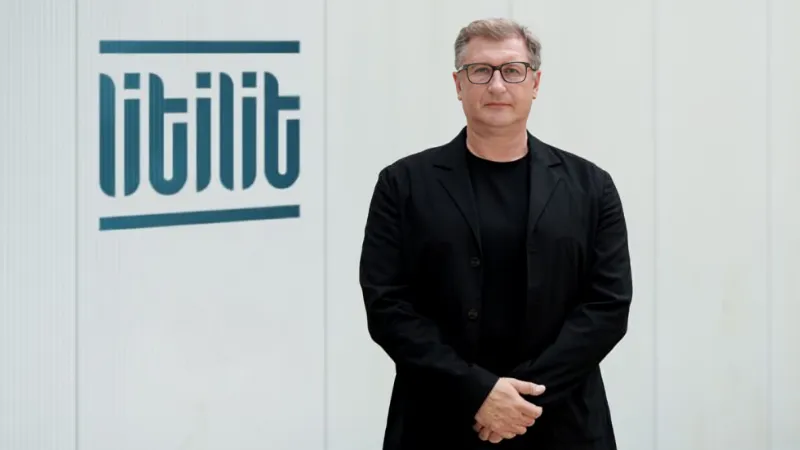
Vilnius-based laser company LITILIT has received an €8 million loan from Lithuania’s National Development Bank, ILTE. The funding will support the company’s work on advanced femtosecond laser technology.
LITILIT develops femtosecond lasers using its patented technology. The technology is designed to make these lasers easier and more affordable to produce and integrate into industrial systems.
The company wants to make femtosecond lasers as affordable and easy to integrate as fibre nanosecond lasers. LITILIT believes this could help make femtosecond lasers more widely used in industrial manufacturing.
LITILIT will invest another €2 million from its own funds, bringing the total project investment to €10 million. The company expects to commercialise its new laser system in the second half of 2029.
LITILIT recently started construction of a large-scale femtosecond laser facility in Vilnius. CEO Nikolajus Gavrilinas said the new laser system could significantly increase the number of industrial applications for femtosecond laser technology.
“Currently, femtosecond lasers are mostly used in manufacturing high-value small parts. Our new laser system will enable new applications in existing large-scale industries, such as the mass production of metal tools and the formation of specialised coatings on large surfaces, such as aircraft or car bodies. It will also speed up current femtosecond laser applications, from consumer electronics to displays and chips,” Gavrilinas explains.
FEMODA aims to deliver up to 1,000 watts of optical power through 10 to 20 separate beam channels. Each channel can send femtosecond laser pulses to a different point on a production line. According to Gavrilinas, this could make FEMODA one of the most powerful modular industrial laser systems.
The project is part of LITILIT’s plan to make femtosecond laser systems easier to produce at large scale. At present, one of the main challenges is the difficulty of manufacturing high-power femtosecond lasers in large quantities because traditional systems are complex to build.
To solve this problem, LITILIT started work in June on a new high-capacity laser factory in Vilnius. The factory is expected to begin operations this fall and could produce up to 3,000 femtosecond lasers per year.