
Epochal, a new artificial intelligence startup founded by three former xAI co-founders, has launched with $100 million in funding to develop AI technology capable of forecasting future events.
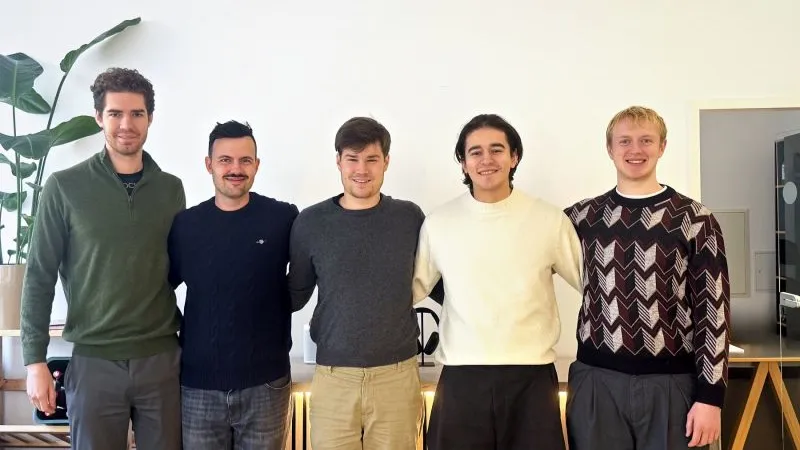
The company was founded by Guodong Zhang, Zihang Dai and Manuel Kroiss, who previously worked together at Elon Musk’s AI company, xAI. According to Bloomberg, Zhang has personally invested $100 million in the startup. No other investors have been announced.
Epochal aims to improve how AI models predict future events by allowing them to learn from historical information without accessing knowledge of what happened afterward.
The startup has also recruited former researchers from major AI companies, including Anthropic, OpenAI and Google DeepMind.
Introducing Time Portal: AI That Learns from the Past
Epochal’s first product is called Time Portal, a cloud-based service that allows AI agents to browse the internet as it appeared at specific points in the past.
The platform provides access to more than one trillion historical web pages covering the last 30 years. It allows developers to retrieve information from particular dates, with accuracy down to the minute for frequently updated websites.
The idea is to help AI models practise forecasting using information that was actually available at the time, rather than learning from content that already reveals the outcome.
For example, developers could train an AI model using financial reports and market information available during the first three quarters of 2025. The model could then predict fourth-quarter company earnings without accessing the actual results.
Developers can compare those predictions with the real outcomes to evaluate how accurately the AI forecasts future events.
Preventing AI Models from Accessing Future Information
One challenge in AI forecasting is that models can recognise when they are working with historical information. They may compare website timestamps with the current date displayed by their operating system or other software tools.
This can affect the quality of forecasting experiments.
Epochal addresses this problem through a specialised Linux sandbox that synchronises the operating system’s clock, software and downloads with the historical period being tested.
For example, when an AI model is working with information from 2025, its virtual environment is also configured to reflect that period. This helps prevent the model from identifying future information through differences in software versions or system dates.
Testing AI Forecasting Accuracy
Epochal has tested Time Portal using 347 live questions from prediction market platforms Kalshi and Polymarket.
The company first ran AI forecasting agents on these questions and recorded their predictions. Several weeks later, it replayed the same questions through Time Portal using historical internet information.
According to Epochal’s internal testing, the historical forecasts closely matched the original predictions, achieving a correlation of 0.98.
The result suggests that Time Portal can recreate historical forecasting conditions with a high degree of consistency. However, this test does not independently establish that the technology can accurately predict future events.
Free Access for Developers
Epochal is initially offering a limited free version of Time Portal for developers, with restrictions on usage.
The company plans to share additional results from its AI forecasting experiments to demonstrate how its technology can support the development and training of predictive AI models.
With $100 million in founder-backed funding and an experienced team from leading AI companies, Epochal is entering the growing AI infrastructure market with a focus on one major challenge: helping artificial intelligence systems make better predictions about what happens next.