Peak Energy, a California-based energy storage startup developing sodium-ion battery systems, has expanded its Series B funding round to $157 million to increase manufacturing capacity and prepare for commercial deployments in 2027.
The expanded financing includes $132 million in equity funding and a $25 million debt facility from HSBC. The company added $49 million to its previously announced $108 million Series B round.
The original funding round was led by General Motors Ventures, with participation from Maverick Silicon, Eclipse, Infinite Capital, Xora Innovation and LG Technology Ventures.
Peak Energy said the additional investment comes as customer demand grows, with the company reporting more than $2.5 billion in customer agreements.
The new capital will support manufacturing expansion, pilot projects and commercial deployments. The company is also planning a demonstration project to showcase the economic benefits of its energy storage technology for data centres.
Developing Sodium-Ion Battery Technology
Founded in 2023, Peak Energy is developing sodium-ion battery systems designed specifically for large-scale, stationary energy storage rather than electric vehicles.
Its technology aims to help electricity grids store power when supply is available and release it when demand increases.
Unlike conventional lithium-ion energy storage systems, Peak Energy uses sodium-ion battery technology, which relies on sodium instead of lithium to store and release electricity.
The company’s systems also feature passive cooling, eliminating the need for conventional active cooling equipment and reducing maintenance requirements.
According to Peak Energy, its energy storage systems could reduce storage costs by up to 20% compared with conventional alternatives. The company also says its systems are designed to operate for up to 30 years without requiring battery augmentation.
HSBC Provides $25 Million Debt Facility
Alongside its equity funding, Peak Energy has secured a $25 million financing facility from HSBC.
The debt financing is expected to support project deliveries from 2027 and help the company expand its supply chain as commercial operations increase.
Peak Energy’s Vice President of Finance, Zack Jacobson, said the additional financing would provide greater flexibility to fund customer projects without relying entirely on new equity investments.
The company aims to use different financing structures to support manufacturing growth while managing the cost of raising additional capital.
Data Centres Drive Demand for Energy Storage
Growing electricity demand from artificial intelligence and data centres is creating new opportunities for energy storage companies.
Data centres require reliable electricity supplies to operate servers, AI infrastructure and other computing systems. As more companies invest in AI, the need for additional power generation and energy storage is increasing.
According to Lawrence Berkeley National Laboratory, US data centres consumed approximately 192 terawatt-hours (TWh) of electricity in 2024, representing around 4.7% of national electricity consumption.
The report projects that consumption could reach 649 TWh by 2030, accounting for approximately 11.8% of US electricity use.
Peak Energy believes its sodium-ion technology could help address these growing energy requirements by providing reliable, long-duration and cost-efficient storage solutions.
Expanding Manufacturing for Commercial Deployment
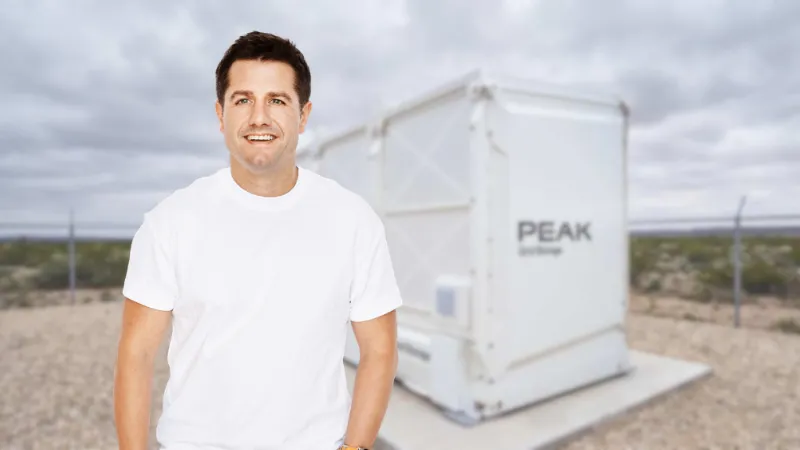
Peak Energy is led by co-founder and CEO Landon Mossburg, whose previous experience includes working at Tesla, Northvolt and Einride.
The company brings together professionals with backgrounds in battery technology, manufacturing automation and energy storage deployment.
With its Series B financing now reaching $157 million, Peak Energy plans to increase production capacity, expand its supply chain and prepare for commercial deployments beginning in 2027.
The company’s growing customer agreements and focus on data centre energy requirements position it to participate in the expanding market for grid-scale energy storage.