Berlin-based voice AI startup elbic, previously known as KugelAudio, has raised around €2.7 million ($3 million) in a pre-seed funding round. The company is developing AI technology for voice-based communication.
The funding round was led by London-based Repeat Ventures. Other investors included San Francisco-based Rebel Fund, Y Combinator and several German business angels. These included Maik Mahlkow and David Nordhausen, founders of fastgen, and Erik Ziegler, co-founder of voize.
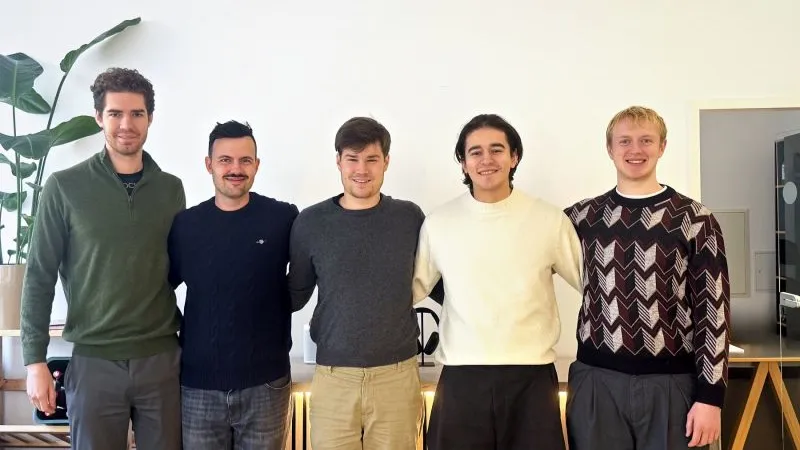
“Companies that let an AI handle their customer calls don’t want to send those conversations through servers in the US, and the models have to really master German. With five people in Berlin, we’re showing that these models don’t have to come from Silicon Valley. We want to stay the smallest lab that builds its own speech models,” said Presber, co-founder of elbic.
Founded in 2025 by Victor Presber and Kajo Kratzenstein, elbic develops its own AI speech models for telecom companies and contact centre providers. Its technology helps these businesses keep customer call data away from US-based servers. Before starting elbic, Kratzenstein studied computer science at the Hasso Plattner Institute in Potsdam. He spent two years researching how to make AI-generated speech sound more natural. This research led to the development of the company’s first open-source speech model.
According to the company, the model has been downloaded more than 150,000 times on Hugging Face. Presber previously co-founded a software startup called full-house.io. He also started his first business, a video production company, when he was just 17 years old.
“In our project, it was extremely important to us to choose a purely European solution. Elbic makes that possible, and in use, both the pronunciation and the range of European voices convinced us right away. We value the naturalness of the voices and the direction the product is taking,” said Sebastian Schumann, Senior Architect, Network & Services International at Deutsche Telekom.
The new funding will mainly be used to increase computing capacity and develop the next generation of AI speech models. The company also plans to bring these models to more business customers across Europe. Its new name, chosen because it is short and easy to pronounce in different languages, reflects its plans to expand beyond Germany. elbic aims to become a leading provider of secure, Europe-based voice AI technology for businesses across the region.