Dream Labs has raised $90 million in seed funding to develop AI technology that allows robots from different manufacturers to perform tasks using simple instructions. The San Francisco-based startup is building a general-purpose robotics AI model designed to help machines understand their surroundings and carry out physical tasks without requiring extensive task-specific programming.
The seed round was led by B Capital and Kindred Ventures, with participation from A.Capital, Unusual Ventures, SV Angel, Wing VC, Scribble VC, and Adrian Aoun, among others.
Alongside the funding announcement, Dream Labs launched Dream API, a publicly available application programming interface (API) that converts a robot’s camera feed and plain-English instructions into motor commands.
The company plans to use most of the new capital to expand its computing capacity, improve its AI model, and support more robots and users.
How Dream Labs Plans to Use the $90 Million Funding
Dream Labs will primarily invest the funding in computing infrastructure as it develops its flagship AI model, Dream-1.
The company wants to expand the range of tasks the model can perform and the types of robots it can control. It also plans to increase its capacity to support developers, robotics manufacturers, and businesses using its technology.
Traditional robots are often programmed to perform specific tasks. When manufacturers introduce a new task or change the hardware, they may need to spend significant time and resources adapting the system.
Dream Labs aims to reduce this complexity by developing AI that can transfer its capabilities across different robots, making automation easier to deploy.
Dream Labs Launches Dream API for General-Purpose Robotics
Dream API is designed to let developers control robots using visual information and natural-language instructions.
For example, a developer could give a robot a simple instruction to pick up an object and place it somewhere else. The system processes the camera feed and instruction, then generates the motor commands needed to carry out the task.
Dream Labs says its API can work with robots it has never encountered before, provided they meet the supported hardware requirements.
The company also offers Fine-tuning as a Service. Developers and robot manufacturers can submit a small amount of demonstration data to create a model tailored to unsupported hardware or new capabilities.
Another product, Robot Playground, allows people to send commands to a robot in the company’s San Francisco office through a browser and watch its response live, without purchasing a robot.
These products are designed to make robotics AI more accessible to developers and companies that lack the resources to build their own models from scratch.
What Is Dream-1 and How Does It Work?
Dream-1 is Dream Labs’ flagship robotics AI model. It is trained on videos of people performing everyday tasks, allowing it to learn patterns about how objects move and how actions affect the physical world.
Instead of learning exclusively from demonstrations on one particular robot, the model uses visual information to predict what should happen next and determine the resulting action.
This approach is intended to help the same underlying model operate across different hardware platforms.
According to the company, Dream-1 can control robots with grippers without additional training data for supported configurations. Its current capabilities include tabletop activities such as picking up and placing objects and folding laundry.
Dream Labs works with more than 20 hardware partners, whose supported robots generally cost between $2,000 and $10,000. The company is also developing support for wheeled mobile robots and more dexterous robotic hands.
Why Dream Labs Is Targeting the Robotics Market
Industrial robots are widely used in manufacturing, but many remain limited to specific tasks and carefully controlled environments.
Programming robots for new activities can require specialist engineering work, making automation expensive and difficult to scale. The challenge becomes more significant when companies operate machines from different manufacturers.
Dream Labs is attempting to address this problem with a general-purpose AI model that can transfer learned capabilities between machines.
If the approach works reliably across a wider range of real-world settings, it could help manufacturers, warehouses, and other businesses automate more tasks without developing a separate AI system for every robot.
However, performance across different machines and environments remains an important challenge for robotics AI. Dream Labs will need to demonstrate that its technology can handle increasingly complex tasks reliably as it expands its capabilities.
Who Founded Dream Labs?
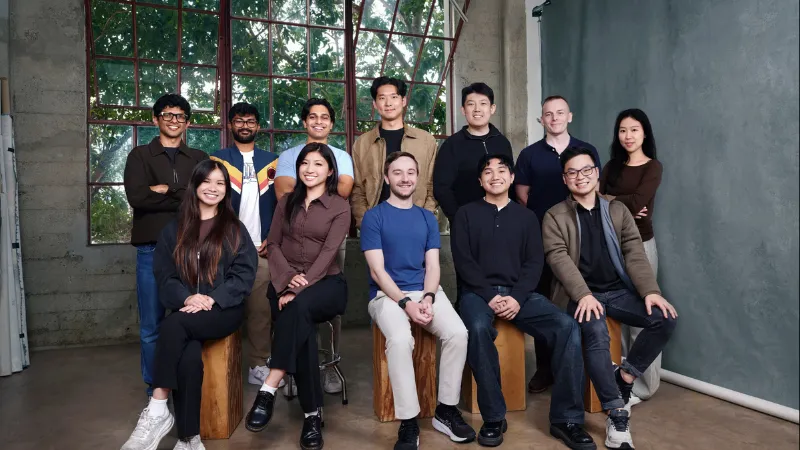
Dream Labs was founded in 2026 by former leaders of NVIDIA’s GR00T robotics research team. The company is headquartered in San Francisco and focuses on building AI models that help robots understand and interact with the physical world.
Its business model combines access to robotics AI through an API with customized model development for hardware manufacturers and developers.
Rather than building only its own robots, Dream Labs aims to provide the intelligence layer that can power machines made by different companies.
The new $90 million seed funding will support the development of this technology as the company works to expand its model’s capabilities and commercial reach.