Ultra Robotics has raised $62 million across two funding rounds to expand its warehouse robotics business and develop its AI-powered automation technology.
The Brooklyn-based startup raised $50 million in a Series A round led by Framework Ventures, with participation from Y Combinator. Its earlier $12 million seed round was jointly led by Y Combinator and NextView Ventures.
Ultra develops warehouse robots that automate tasks such as sorting products, assembling customer orders and preparing packages for shipping. The company plans to use the new funding to support engineering projects and expand adoption of its robots.
Ultra Uses a Robotics-as-a-Service Model
Unlike companies that sell robots directly to warehouse operators, Ultra offers its machines through a monthly subscription model known as Robotics-as-a-Service (RaaS).
Customers pay an upfront integration fee to install the robots, followed by recurring monthly fees for hardware and software support. This model allows warehouses to adopt automation without making a large initial investment in equipment.
Ultra CEO and co-founder Jon Miller Schwartz told that the business model has helped the company attract customers and generate significant revenue, although he did not disclose the amount.
The company has also expanded its relationship with Physical Intelligence, an AI startup developing technology that helps robots understand and perform tasks in the physical world.
Under this approach, Ultra focuses on building and deploying the robots, while Physical Intelligence provides AI technology that can help them adapt to different warehouse environments. The partnership also gives AI developers access to real-world operational data that can help improve their models.
How Ultra’s OP1 Operator Robot Works
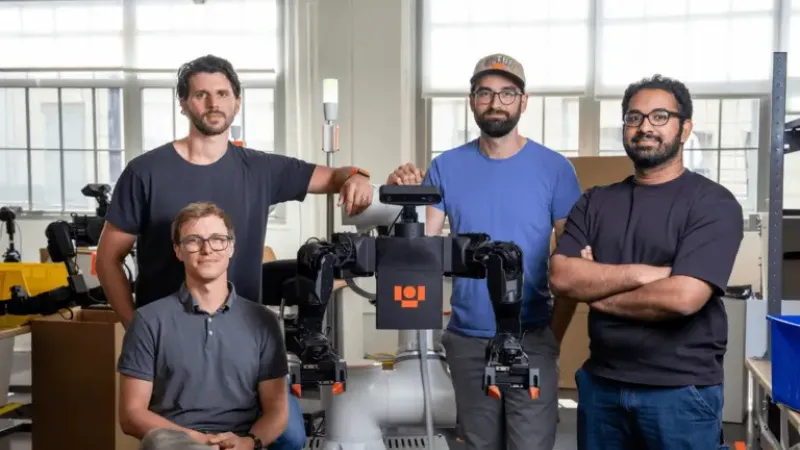
Ultra’s main product, the OP1 Operator, is designed to handle repetitive warehouse tasks. It combines a robotic arm with a pair of forklift-style grippers that can lift and move items.
The robot can reach shelves up to 10 feet high and pick up products that fall to the floor. It is designed to automate several stages of warehouse order processing.
One task is sorting inbound shipments. When a shipment contains different types of products, the robot can separate them into bins according to item type.
It can also perform kitting, which involves combining different items into a single order. For example, when a customer buys several products from an online store, the robot can gather those items and prepare them for shipping.
The OP1 Operator can also handle packaging tasks, including placing products into envelopes or plastic bags, sealing packages and applying shipping labels.
According to Ultra, a robot can process up to 1,000 items per day once it is operational. The company also says installation and setup can take only a few hours, reducing the work required from customers.
A Different Approach to Warehouse Robots
While humanoid robots often attract attention, Ultra is focusing on machines designed for specific commercial tasks.
The OP1 Operator uses a wheeled base that workers can manually move between warehouse sections. Once it reaches the required position, its wheels lock into place. The robot connects to a standard electrical outlet and a local network, avoiding the need for routine battery charging.
Ultra also uses data from its robots to improve the AI models powering its systems. This approach could help the machines perform more effectively as they encounter different products and warehouse conditions.
The company says its robots have already packed more than 500,000 orders for shipping, showing early adoption of its technology.
Warehouse automation is becoming increasingly important as logistics companies and retailers look for ways to process more orders, manage labour-intensive tasks and improve operational efficiency. Companies such as Amazon and Exotec also operate in the warehouse robotics market, although their systems use different approaches to automation.
What Comes Next for Ultra Robotics?
With $62 million in funding, Ultra plans to continue engineering work and expand the deployment of its warehouse robots.
Its subscription-based model and partnership with Physical Intelligence are central to its strategy. By combining specialised hardware with AI software, Ultra aims to automate more warehouse tasks without requiring customers to build complex robotics systems themselves.
The company’s next challenge will be to scale deployments while demonstrating that its robots can deliver reliable performance and economic value across different warehouse operations.
As e-commerce and logistics businesses continue investing in automation, Ultra is positioning itself to capture demand for robots that perform practical, repetitive work in real-world settings.