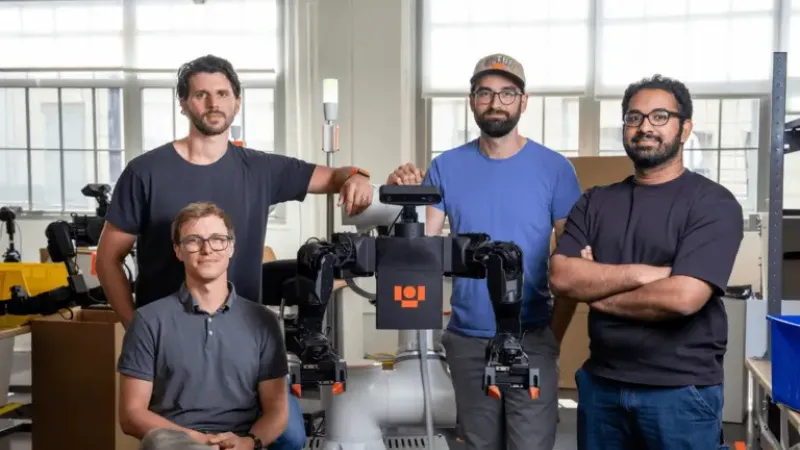

Oxide Computer Company has raised $445 million in Series D funding to expand manufacturing capacity and meet growing demand for its on-premises cloud computing systems.
The funding round was led by returning investor Eclipse. Existing investors US Innovative Technology Fund (USIT), Riot Ventures and Jane Street also participated. New investors AMD Ventures and Atreides Management joined the round.
The company plans to use the new capital to secure hardware components, increase production and support new and existing customers. Oxide said demand for its systems continues to exceed its current manufacturing capacity.
Oxide Scales Manufacturing as Demand Grows
Founded in 2019 and based in Emeryville, California, Oxide develops integrated data center systems that allow businesses to run cloud-like computing infrastructure in their own facilities.
The company’s main product, the Oxide Cloud Computer, combines computing, storage, networking and software in a single rack-scale system. Its design aims to give enterprises the flexibility and automation of cloud computing while allowing them to retain direct control over their infrastructure, data and security.
Oxide said it increased its manufacturing capacity by 20 times over the past 12 months, but customer demand still exceeds supply. The company also reported reaching profitability earlier in 2026, an important milestone as it scales its hardware business.
How Oxide’s Cloud Computer Works
Unlike traditional data center setups that combine equipment from different vendors, Oxide designs its computing, storage, networking and software as one integrated system.
Its rack contains 24 hardware modules, known as sleds. Each sled uses an AMD central processing unit and has access to substantial memory and flash storage capacity. Custom hardware helps manage operating temperatures, power distribution and firmware updates.
The system also includes network switches designed to route traffic around malfunctioning components. Its storage architecture creates multiple copies of records across different flash modules to improve data reliability.
Businesses can also divide the system into separate virtual networks, allowing different teams or workloads to operate in isolated environments with traffic controlled by a built-in firewall.
This integrated approach is designed to help organizations manage complex computing workloads while maintaining greater control over performance, security and operating costs.
AI Demand Creates New Opportunities
Oxide’s latest funding comes as companies invest in infrastructure to support artificial intelligence and other data-intensive workloads.
The growing use of AI agents, which can carry out tasks rather than simply generate responses, is increasing the need for computing power, memory, networking and reliable data center infrastructure. Oxide believes more enterprises will want to own and manage their computing systems rather than depend entirely on external cloud providers.
Eclipse partner Seth Winterroth said Oxide’s integrated infrastructure approach was built to address the growing need for cloud-scale computing that enterprises can own and control.
AMD Ventures’ participation also strengthens the relationship between the two companies. Oxide has previously discussed plans to develop a computing sled that can support a graphics processing unit (GPU), potentially expanding the system’s capabilities for AI-related workloads.
What Comes Next for Oxide?
With $445 million in new funding, Oxide plans to invest in components, manufacturing and product development to keep pace with customer demand.
The company serves customers across financial services, government, national laboratories, aerospace and other industries that require reliable computing infrastructure.
As enterprises look for more control over their data and computing capacity, Oxide is positioning its integrated hardware-and-software platform as an alternative to assembling data center systems from separate components. Its ability to scale production while maintaining reliability and cost efficiency will be important as demand for AI and enterprise computing continues to grow.