
Cloover, an energy platform focused on home solar, heat pumps, and home electrification, has become profitable just three years after launching. The company now has an annual revenue run rate of more than $350 million. It has also secured a new $100 million financing facility, bringing its total financing capacity to more than $1.3 billion.
The financing is supported by a $350 million guarantee from the European Investment Fund. It will help Cloover finance energy equipment and installations across its markets. The company is also preparing to expand into the UK, France, and Poland.
In the past, homeowners often had to pay tens of thousands of euros upfront to install solar panels, heat pumps, or other energy upgrades. Financing, equipment, paperwork, and energy contracts were usually handled by different companies, making the process complicated and expensive for many households.
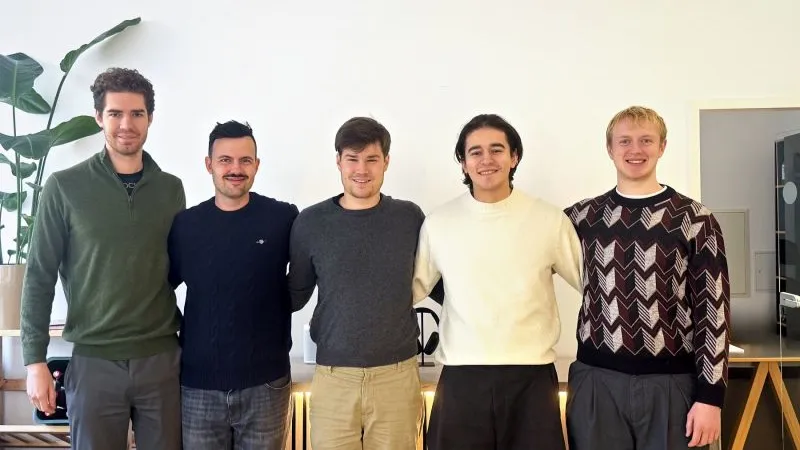
Cloover was founded in Berlin in 2023 by Jodok Betschart, Peder Broms, and Valentin Gönczy. The company uses AI to simplify the entire process. It provides independent installers with financing, software, and energy products, while homeowners can access these services through installers they already know and trust.
The company also combines the energy systems financed through its platform into a virtual power plant. This allows Cloover to operate like a modern, AI-powered energy utility without owning or directly installing all the equipment itself.
Instead of building its own sales team, Cloover works with independent installers, who handle around 85% of the residential energy market. Installers can keep their own brands, customers, and preferred hardware while offering products such as solar systems, heat pumps, and energy-efficient home upgrades.
Cloover provides the financing and software, while also supplying energy products. Customers can receive a financing decision in less than two minutes, pay nothing upfront, and spread their payments over as long as 25 years.
Cloover is now among the top three residential energy companies in Europe’s largest energy market. All of its projects are sold through independent installers, and the company operates across five European markets.
Around 20,000 installations are completed each year through Cloover’s installer network. The company’s growth is closely linked to the growth of its installer partners, allowing it to expand without building a large direct sales operation.
Jodok Betschart, Cloover co-founder, said: “We reach households through the installers they already trust, and then we turn each of those homes into a power plant, and each homeowner into a participant in the energy market. That is a relationship that lasts for decades, not a single transaction.”
After a system is installed, Cloover continues to help households manage and use their energy more efficiently. Through Cloover Energy, its home energy management system helps control energy use in the house. Customers can choose between fixed and flexible energy tariffs.
Cloover also connects solar panels, batteries, heat pumps, and EV chargers into a virtual power plant. This combines many small energy systems into one larger network that can provide useful flexibility to the power grid. Cloover describes this model as an AI-powered “neo-utility.”
A traditional energy company usually owns power plants, buys electricity, and sells it to customers. It mainly competes with other suppliers based on price.
A neo-utility does not need to own power plants. Instead, it uses the energy systems already installed in customers’ homes. The value comes from managing these systems and using their combined energy capacity to support the electricity grid.