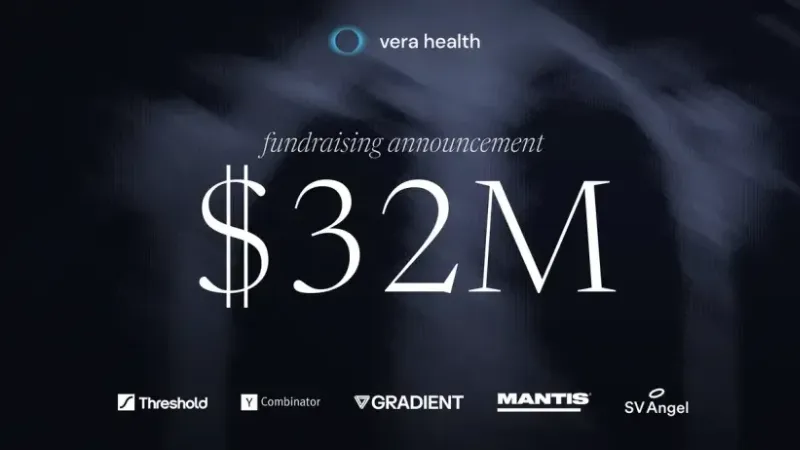
Clinical health platform Vera Health has raised $28.5 million in a Series A funding round led by Threshold Ventures. Other investors include Optum Ventures, a healthcare investment firm backed by UnitedHealth Group, along with Mantis VC and SV Angel.
Vera Health has developed an AI-powered search engine that helps doctors find and review medical research within seconds. The platform provides answers with clear sources and explains the strengths and limitations of the available evidence. It follows HIPAA and GDPR data protection requirements and holds SOC 2 Type II certification.
Existing investors Y Combinator and Gradient also invested more in this round, bringing the company’s total funding to $32 million.
“Clinicians are the best data scientists I’ve ever met. They make the call in seconds, with more evidence than any human could ever read,” said Taieb Bennani, co-founder of Vera Health. “The secret to building for them is to live and breathe the problem like no one else. Everyone on our team is a clinician, or the child or sibling of one, like Maxime and me. That passion translates into every detail of the product, and when you build with that kind of obsession, the product speaks for itself, and clinicians share it with their colleagues. We don’t have the biggest team or the most money. We have the people who care the most about getting it right.”
“Medical knowledge moves too quickly for any one clinician to read, and general-purpose AI tools can make uncertain evidence sound settled,” said Maxime Allouch, co-founder of Vera Health. “Unlike other tools, we believe there’s value in making uncertainty visible. The grade shapes what Vera retrieves and writes, while the clinician brings the patient, the context and the judgment.”
“In medicine, not all evidence is equal,” said Scott M. Silvers, MD, FACEP, Chair of the American College of Emergency Physicians’ Clinical Policies Committee and former Chair of Emergency Medicine at Mayo Clinic. “A large, randomized trial and a case report should never carry the same weight, yet most AI tools blend them into the same confident answer. Level of evidence is the foundation of every guideline we write, and Vera Health is built on it.”
“On a recent emergency-department shift, I saw a young woman with cough and shortness of breath. The symptoms could easily be attributed to a routine respiratory illness,” said Dr. Bernard P. Chang, Vera Health’s Chief Scientific Advisor and Vice Chair of Research in the Department of Emergency Medicine at Columbia University. “Vera Health surfaced evidence that raised my concern for pulmonary embolism, a potentially life-threatening blood clot in the lungs, and led me to broaden my evaluation. What interests me isn’t AI simply providing an answer. It’s whether it can reliably surface evidence that challenges our initial assumptions and improves clinical reasoning. That’s what we’re now evaluating rigorously, inside the academic medical centers where medicine is actually practiced.”
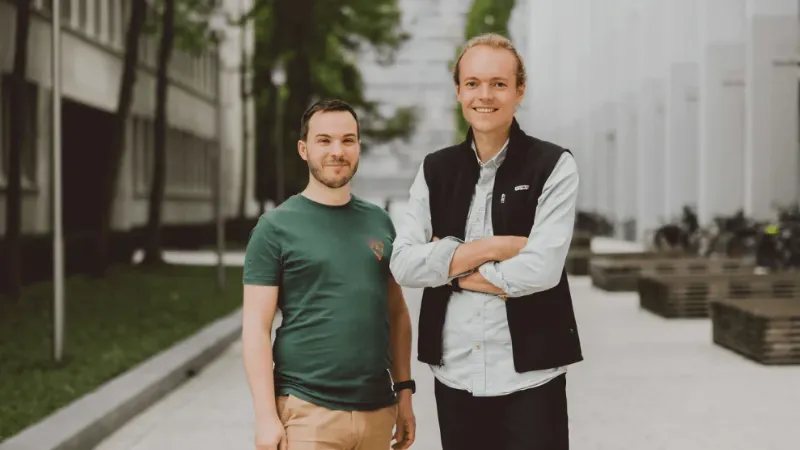
Vera Health was co-founded by French entrepreneur and investor Maxime Allouch and Moroccan entrepreneur Taieb Bennani. The platform was first developed to help their fathers, who are both doctors. What started with just two users has now grown into a platform used by more than 800,000 healthcare professionals worldwide.