Micron Technology reported record fourth-quarter and full-year fiscal 2026 results, as strong demand for memory products used in artificial intelligence infrastructure drove a sharp increase in revenue and profit.
The memory-chip company reported $54.23 billion in revenue for the fourth quarter, up from $41.46 billion in the previous quarter and $11.32 billion in the same quarter a year earlier. Micron said fiscal 2026 revenue reached a record $133.19 billion, compared with $37.38 billion in fiscal 2025.
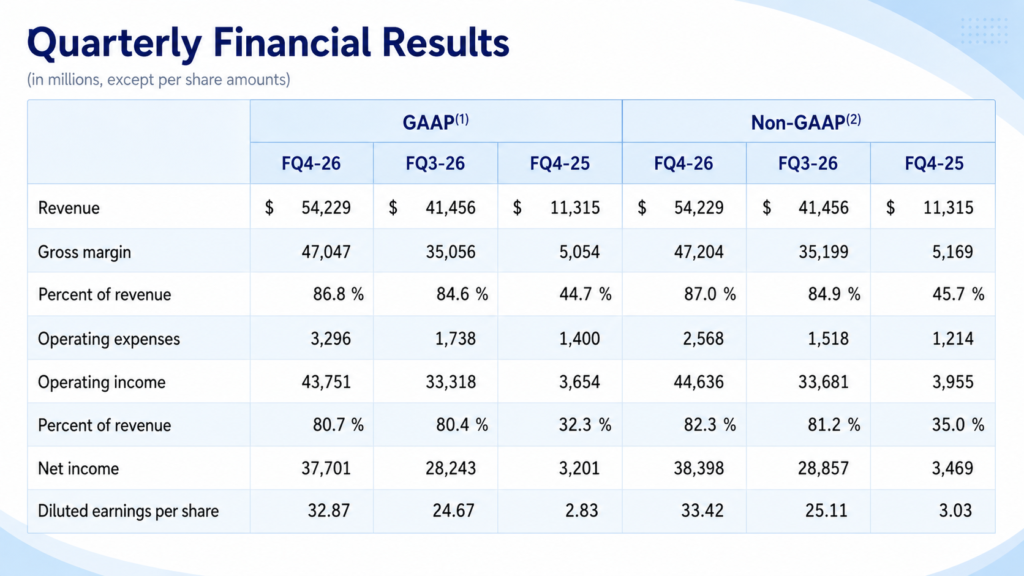
Micron reported GAAP net income of $37.70 billion, or $32.87 per diluted share, for the fourth quarter. Non-GAAP net income was $38.40 billion, or $33.42 per diluted share.
The company’s fourth-quarter results were above Wall Street expectations. Investing.com reported adjusted earnings of $33.42 per share versus an analyst estimate of $31.16, while revenue of $54.23 billion compared with an estimate of $50.45 billion.
Micron’s GAAP gross margin reached 86.8% in the quarter, compared with 84.6% in the previous quarter. Its non-GAAP gross margin was 87.0%.
Micron’s fiscal 2026 results also marked a major increase from the previous year.
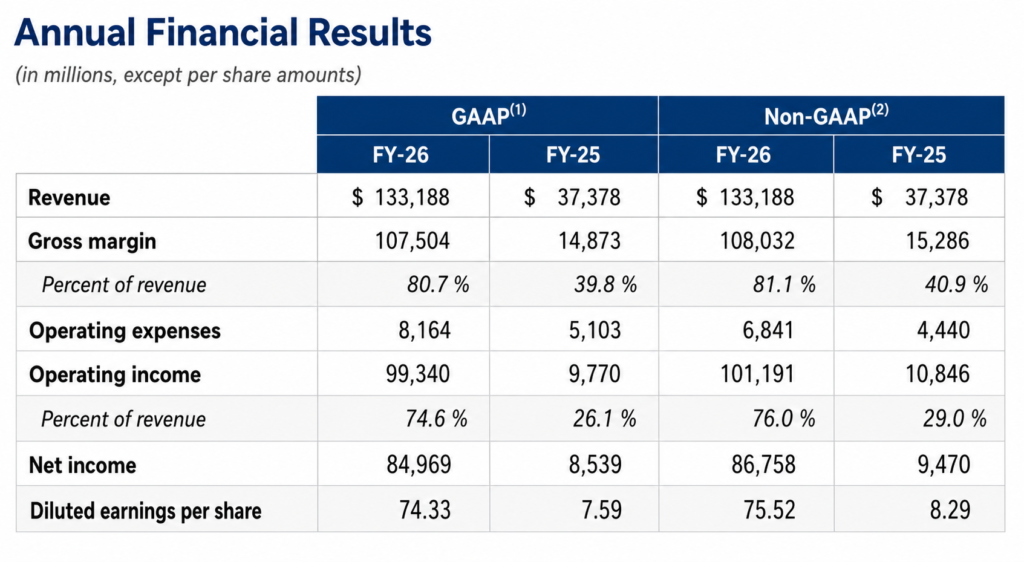
Micron reported $84.97 billion in full-year GAAP net income, compared with $8.54 billion in fiscal 2025. Non-GAAP net income reached $86.76 billion, compared with $9.47 billion a year earlier.
The company also generated $89.68 billion in operating cash flow during fiscal 2026, compared with $17.53 billion in the previous fiscal year.
The results highlight the growing importance of memory chips in AI infrastructure. High-bandwidth memory (HBM), DRAM and other memory products are increasingly important for AI data centers and accelerated computing systems.
Micron Chairman and CEO Sanjay Mehrotra said the company delivered record quarterly and full-year results as demand for memory chips continues to grow with the expansion of artificial intelligence.
Mehrotra said Micron expects further growth in the coming fiscal year. He added that memory technology is becoming increasingly important as AI systems develop into more advanced forms of intelligence.
He said Micron plans to increase investment in technology, products and manufacturing capacity to support the growing AI market. The company’s long-term agreements with major customers also give it greater confidence in future financial performance.
Micron said demand remains strong and that supply conditions are expected to remain tight. Reuters reported that Micron’s long-term supply agreements increased to $32 billion, up from $22 billion in June, while the company expects supply-demand conditions to remain tight into fiscal 2027 and 2028.
Micron has also been increasing investment in manufacturing capacity and technology to respond to demand.
Read Also – Lego H1 2026 Results: Revenue Hits $6.5 Billion as Sales Jump 21%
Micron expects another strong quarter to begin fiscal 2027.
For the first quarter of fiscal 2027, the company forecast:
The revenue outlook is above Wall Street expectations, according to financial-market coverage of the results.
Micron is also putting more money into production capacity as it prepares for continued demand.
The company invested $27.37 billion in net capital expenditures during fiscal 2026. Adjusted free cash flow reached $62.31 billion for the year. Micron ended fiscal 2026 with $73.48 billion in cash, marketable investments and restricted cash.
The company expects to continue investing heavily in technology, products and manufacturing capacity as demand for AI-related memory grows.
Read Also – NVIDIA Announces Financial Results for Second Quarter Fiscal 2027
Micron’s results provide another indication of how AI infrastructure spending is affecting the semiconductor memory market.
The company’s strong revenue growth, high gross margins and higher fiscal 2027 outlook came alongside plans for increased capacity investment. At the same time, Micron has indicated that memory supply may remain constrained as AI data-center demand expands.
For investors and the wider semiconductor industry, the key areas to watch will be AI-related memory demand, HBM production, supply availability, capital spending and pricing conditions.
Micron’s results do not guarantee that current market conditions will continue, but they provide company-specific evidence of strong demand entering fiscal 2027.
Micron enters fiscal 2027 with record annual revenue, significantly higher profitability and a strong first-quarter outlook. The company’s latest results also show the scale of investment required to expand memory production as AI infrastructure continues to develop.
The next quarters will provide more information about whether strong AI-related demand can continue to support Micron’s revenue and margins while the company increases manufacturing capacity.