Technology is changing fast. Businesses are buying new devices, upgrading IT infrastructure and moving towards more digital operations every year.
But what happens to the technology that is replaced?
This is where technology lifecycle management becomes important.
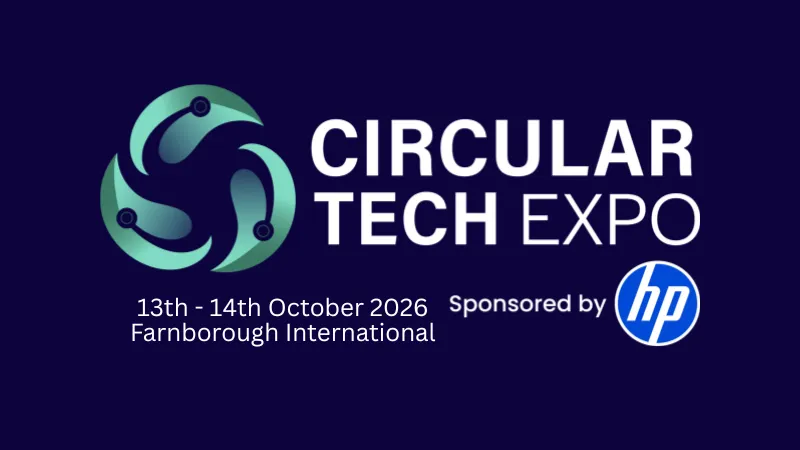
Circular Tech Expo 2026 is bringing together professionals who are working to make technology management more secure, sustainable and commercially valuable. The event will take place on 13–14 October 2026 at Farnborough International in the UK.
The event focuses on areas such as IT Asset Disposition (ITAD), IT Asset Management (ITAM), data centre decommissioning, secure reuse, e-waste recovery and circular technology.
What is Circular Tech Expo?
Circular Tech Expo is a focused event for professionals involved in the technology lifecycle.
It brings together businesses and decision makers who manage technology from the time it is purchased until it reaches the end of its useful life.
This includes IT teams, data centre operators, sustainability professionals, compliance specialists, ITAD companies and technology solution providers.
The main focus is simple.
How can businesses manage technology better while protecting data, reducing waste and recovering value from their assets?
Why Technology Lifecycle Management Matters
For many businesses the technology lifecycle used to be straightforward.
Buy the equipment. Use it. Replace it. Dispose of it.
Today things are different.
An old laptop may still have value. A server that is no longer needed by one company may be useful somewhere else. Network equipment can often be refurbished or remarketed. Even equipment that cannot be reused may contain materials that can be recovered through responsible recycling.
This is why businesses are looking beyond simple disposal.
They are looking at the complete lifecycle of their technology.
The Growing Role of ITAD
IT Asset Disposition or ITAD is an important part of this process.
A good ITAD programme can cover everything from collecting old equipment to data destruction and final recycling.
The process can include:
- Asset collection
- Asset tracking and inventory
- Data erasure
- Data destruction
- Testing and grading
- Refurbishment
- Reuse
- Remarketing
- Parts recovery
- Recycling
- Reporting
The right approach depends on the type of equipment and the organisation’s requirements.
The goal is to make sure that retired technology is handled securely and responsibly.
Data Security Cannot Be Ignored
Old IT equipment can contain sensitive information.
Laptops can contain employee data. Servers can contain business information. Storage devices can hold customer records and other confidential data.
Simply removing the equipment from an office does not mean the data risk is gone.
Secure data sanitisation needs to be part of the asset lifecycle.
Businesses need to know what happens to their data-bearing equipment after it leaves their facility. They also need proper records and documentation of the process.
This is one reason ITAD has become an important part of modern IT management.
Data Centre Decommissioning
Data centres are another major part of the technology lifecycle.
A data centre can contain thousands of servers and networking devices along with storage systems and other infrastructure.
When a data centre is upgraded or closed, managing these assets can become a major project.
The equipment needs to be identified and removed carefully. Data must be handled securely. Assets that still have value can be recovered or remarketed. Equipment that has reached the end of its useful life should go through responsible recycling.
A well-planned decommissioning process can help businesses reduce risk while recovering value from their retired equipment.
Moving From Disposal to Recovery
One of the biggest changes in the industry is the move away from the traditional idea of disposal.
The question is no longer simply:
“How do we get rid of this equipment?”
It is becoming:
“What can we recover from this equipment?”
An asset may have a second life through reuse or refurbishment. It may have resale value. Its components may be useful in another application.
If none of these options are suitable then responsible recycling becomes the next step.
This approach supports the idea of a circular economy.
E-Waste and the Circular Economy
The amount of electronic waste generated around the world continues to grow.
Businesses replace technology more frequently. New products enter the market and older equipment becomes obsolete.
But not every retired device needs to become waste immediately.
Extending the useful life of technology through reuse and refurbishment can help keep products in circulation for longer.
When equipment can no longer be reused, recycling can help recover materials that would otherwise be lost.
This is an important part of building a more circular technology industry.
ESG and Sustainable Technology
Sustainability is also changing the way businesses look at their IT assets.
Companies are paying more attention to their environmental impact. They are also facing greater expectations around ESG reporting and carbon reduction.
Technology is part of this conversation.
The way equipment is purchased, used, replaced and recovered can all have an impact on an organisation’s sustainability goals.
A strong technology lifecycle programme can help businesses make better use of existing assets while supporting responsible end-of-life management.
The Importance of Regulation
Regulations are also playing a role in how technology is managed.
Extended Producer Responsibility or EPR is one example of the wider shift towards lifecycle responsibility.
The focus is moving beyond the point where a product is sold. There is growing attention on what happens to products when they reach the end of their useful life.
For businesses this means that proper records and responsible downstream processes are becoming increasingly important.
Where Business Value Meets Sustainability
Circular technology is not only about the environment.
There can also be a strong business case.
Retired technology may still have financial value. Businesses can recover value through reuse, refurbishment and remarketing.
A structured asset recovery programme can also help organisations:
- Reduce unnecessary disposal
- Recover value from retired equipment
- Extend asset lifecycles
- Improve data security
- Increase asset visibility
- Support sustainability goals
- Improve recycling outcomes
The right strategy depends on the organisation and its technology environment.
Who Should Attend Circular Tech Expo?
Circular Tech Expo is relevant to professionals across the technology lifecycle.
This includes:
IT leaders who manage enterprise technology and infrastructure.
Sustainability teams working on ESG and environmental goals.
Data centre operators managing large technology environments.
Compliance and security teams responsible for data protection and regulatory requirements.
ITAD and ITAM companies providing asset lifecycle services.
Recycling and technology companies working on reuse, recovery and circular solutions.
It creates an opportunity for these groups to meet and discuss the challenges facing the industry.
Reloop Recycling at Circular Tech Expo 2026
Reloop Recycling is proud to be part of Circular Tech Expo 2026.
We will be at:
📅 13–14 October 2026
📍 Farnborough International, UK
🎯 Stand A3
Raju Lajwani, CEO of Reloop Recycling, will also be attending the event.
Visitors can meet our team and discuss IT asset recovery, ITAD, e-waste management, secure data handling, reuse, remarketing and responsible recycling.
For us, events like Circular Tech Expo are a great opportunity to meet industry professionals and understand where the technology lifecycle industry is heading.
Looking Ahead
Technology will continue to change.
Businesses will continue to upgrade their systems and replace older equipment.
The important question is what happens next.
Instead of seeing retired technology as waste, businesses can look at opportunities for reuse, recovery and recycling.
That is at the heart of the circular technology approach.
Circular Tech Expo 2026 brings this conversation together under one roof. It gives technology and sustainability professionals a place to share ideas, explore solutions and build new connections.
Meet Reloop Recycling at Circular Tech Expo 2026
📅 13–14 October 2026
📍 Farnborough International, UK
🎯 Stand A3
Come and meet Raju Lajwani, CEO of Reloop Recycling, and our team.
Let’s talk about how businesses can manage their technology assets more securely and responsibly while finding opportunities to recover value.
#CircularTechExpo #ReloopRecycling #ITAD #ITAM #ITAssetRecovery #EWasteManagement #CircularEconomy #DataCentreDecommissioning #TechnologyLifecycle #SustainableTechnology #Recycling