
London-based AI chip startup Fractile has raised €649 million ($720 million) in a Series C funding round. The investment values the company at €6.3 billion ($7 billion) after the funding. The company will use the new capital to bring its AI inference hardware to market.
The funding round was co-led by Thrive Capital, Founders Fund, Lightspeed and Redpoint. Other investors included CapitalG, Dragoneer Investment Group, DST Global, Elad Gil, BlackRock, Bain Capital Ventures, T. Rowe Price, SV Angel, Sovereign AI, the British Business Bank, Shopify Ventures, Felicis, Gigascale Capital, 20VC and Balderton, along with existing investors.
AI Minister Kanishka Narayan said: “For too long, Britain has produced some of the world’s best scientific ideas, only to see too much of the technology, industry and wealth they create built elsewhere. We are determined to change that.”
Phil Chambers, Partner at Balderton, said: “Walter and the Fractile team made a bold bet back in 2022: that the real limit on frontier AI would be how fast it can produce useful outputs, and that the only way to fix that at scale was to rebuild the hardware itself. By stacking DRAM directly on top of logic, and owning every layer from silicon to systems, software and core ML research, they have built an architecture that delivers both speed and scale. That kind of full-stack ambition is rare for a chip company, and it makes Fractile one of the most exciting places in the world right now for engineers who want to work on AI’s hardest problems.”
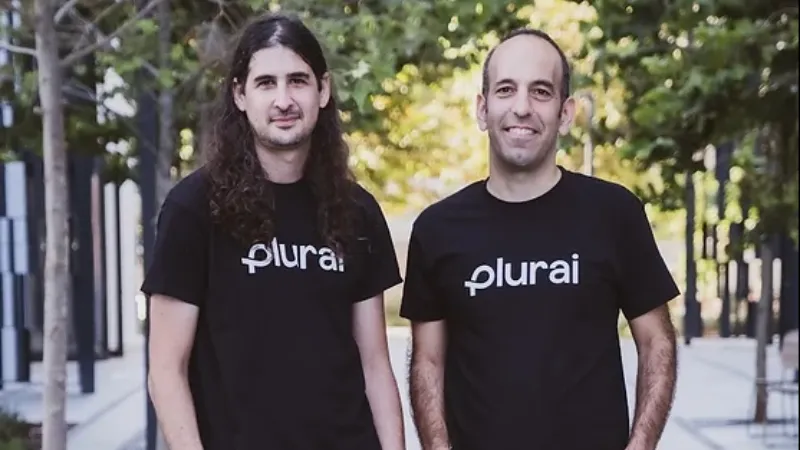
Founded in 2022 by Walter Goodwin and Yuhang Song, Fractile is headquartered in London and also has operations in Bristol. The company’s CEO, Walter Goodwin, previously completed doctoral research in robotics and artificial intelligence at the University of Oxford.
Fractile develops computer chips designed specifically to run AI models and generate their responses. This process is known as AI inference. As AI technology advances, especially with the growth of reasoning models and AI agents that can perform tasks independently, the computing power needed to run these systems is also increasing.