Swiss robotics startup coprod has raised €5.45 million ($6 million) in a pre-seed funding round. The company develops modular hardware components that help build robots and physical AI systems.
The funding round was co-led by Founderful and PROTOTYPE. Other investors included General Catalyst, Pace Ventures, Tiny Supercomputer Investment Company, Kima Ventures, SDAC, Unruly Capital and Venturekick.
Several angel investors also participated in the round, including Thomas Wolf, founder of Hugging Face, the Dassault Family and Florent Perrichon.
“We believe that a robot with purpose-built hardware designed for a specific task will do that task faster, cheaper and more reliably than any general purpose robot ever could, regardless of which model runs on it. We see robotics as just another tool that humans should be able to leverage to improve their daily lives, this starts by empowering them to build those robots by abstracting away complexity, coprod is offering this fertile ground,” said Delineau, CEO and cofounder of coprod.
“The robotics revolution is real and we will be able to rethink every industry because of it. coprod is fixing the biggest problem in hardware: integration hell. Robotics founders need a single standard for basic components and middleware that simply works and allows them to focus on the parts of their product that creates value to their customer as quickly as possible,” said Andreas Klinger, Investor at PROTOTYPE.
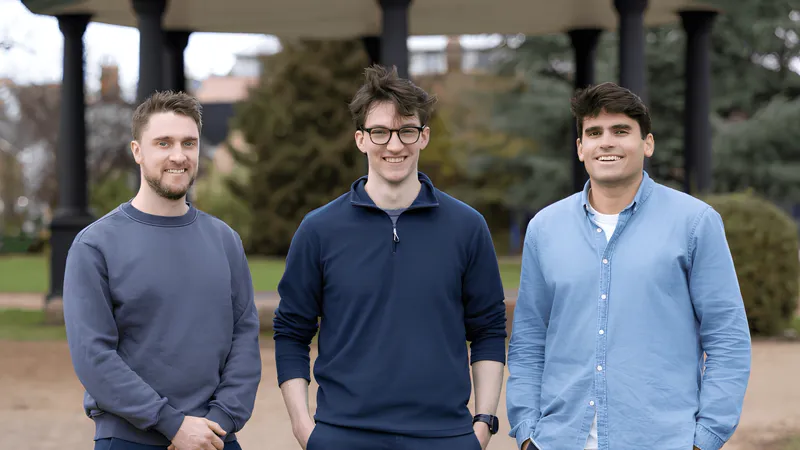
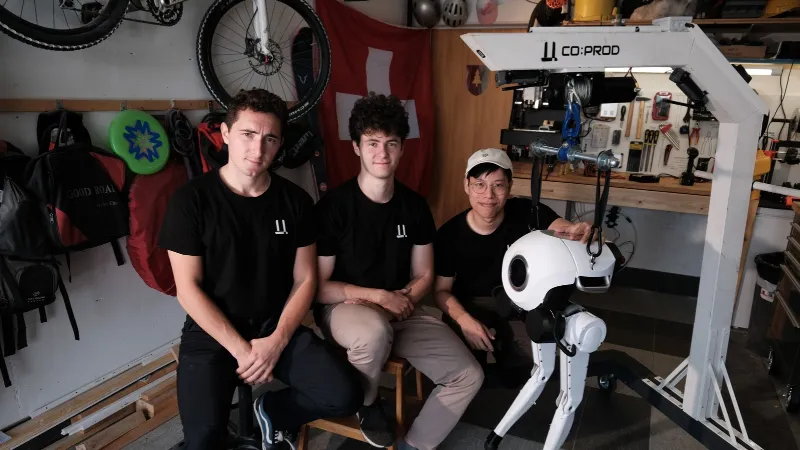
Founded in late 2024 by EPFL graduates Loïc Delineau, Vincent Nguyen and Matthias Schuller, Swiss startup coprod aims to solve a major problem in the robotics industry: making different hardware components work together. The company is developing modular components that can be easily combined to build robots.
The three founders started their journey by building a two-legged robot in a garage in the Swiss Alps. They used this early project to show that their modular hardware approach could work and help make robot development easier.
The new funding will help coprod launch its first commercial range of hardware components. The company will also use the investment to build a complete hardware prototyping facility in Lausanne, Switzerland, where it can design, test and develop new robotics components.