French nuclear startup Calogena has secured €40 million in funding from the European Commission’s Innovation Fund. The company is developing a small modular reactor (SMR) designed to provide low-carbon heat to district heating networks.
This is the first time the European Commission has provided funding to an SMR project specifically for the construction of a commercial facility.
“This funding marks a major milestone for Calogena. Having developed our technology and brought it to industrial scale, we are now entering the construction phase of our first commercial reactor,” said Julien Dereux, Executive Chairman of Calogena.
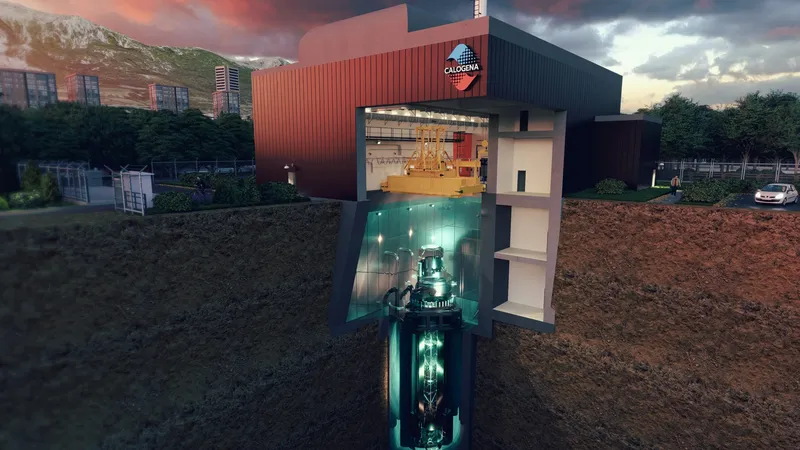
Calogena was founded in 2021 as part of Groupe Gorgé, a Paris-based industrial technology group with around 3,500 employees and €600 million in annual revenue. The company is developing a small water-cooled nuclear reactor with a capacity of 30 megawatts of heat. The reactor is designed to provide cleaner heating for district heating networks and reduce their carbon emissions.
“The European Commission’s support confirms the maturity of our project and its potential to address one of Europe’s major energy challenges: producing local, low-carbon, cost-competitive heat at scale while strengthening energy sovereignty. Pierrelatte would be our first commercial reference and should pave the way for wider deployment across Europe,” added Dereux.
Calogena, a subsidiary of Groupe Gorgé, is developing small modular nuclear reactors (SMRs) to provide cleaner heating to towns and cities. Its parent company, Groupe Gorgé, is a high-tech industrial group with around 3,500 employees and €600 million in revenue.
The company’s reactor uses a proven pool-based design and operates at low temperatures and pressure. This design aims to make the reactor safer, simpler and more affordable to operate.
Calogena is working on projects in several European countries, with its first reactor expected to become operational in 2032. The technology is designed to provide a reliable supply of low-carbon heat while helping European countries reduce their dependence on imported energy.
The company has also been selected for funding through France 2030 and the European Commission’s Innovation Fund.