
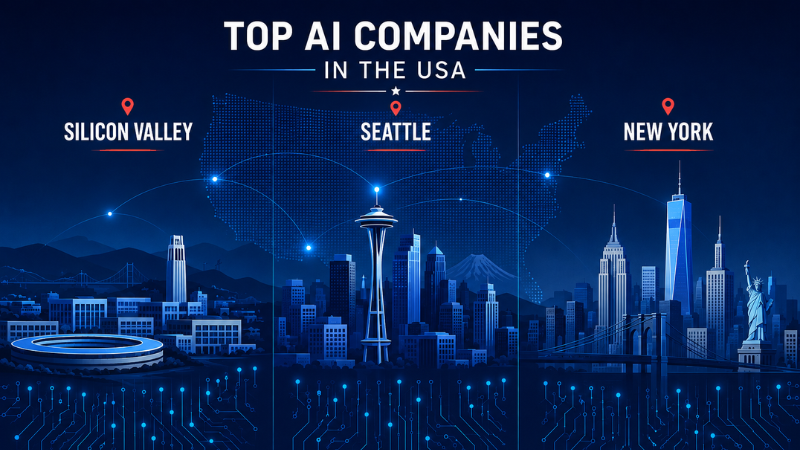
Ask ten people to name the top AI company in America and you’ll probably get ten different answers, and honestly, they might all be right. That’s the strange part of covering this industry right now: the “best” AI company depends entirely on what you’re measuring. OpenAI has the most recognizable product. NVIDIA sells the chips almost everyone else depends on. Anthropic just became the most valuable AI startup on the planet, passing OpenAI in a funding round most people missed. None of these companies are competing on the same axis, which is exactly why year-end “best AI company” lists tend to feel arbitrary.
This one tries to be less arbitrary. Below are ten US-based companies that matter right now — not because they’re famous, but because of what they’ve built, who’s actually using it and how much influence they have over where AI goes next.
That mix includes the household names everyone expects (OpenAI, Google, Microsoft) alongside a couple of companies that don’t get nearly as much press but are quietly running the infrastructure and enterprise deployments that make the flashier products possible.
Top 10 AI Companies in the USA
1. OpenAI
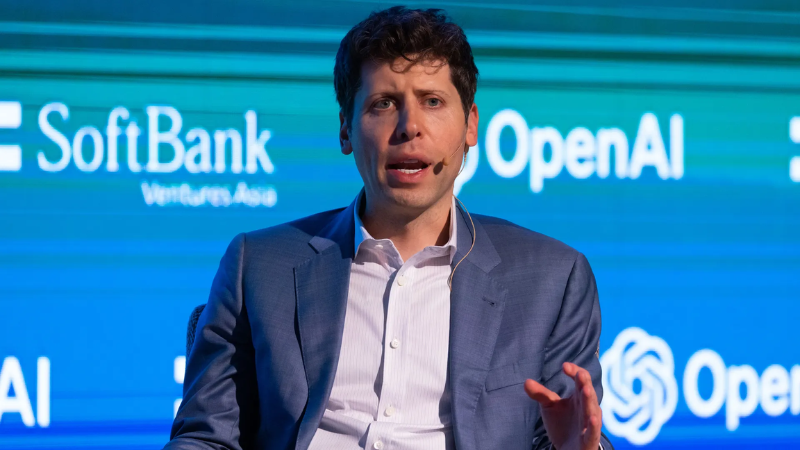
OpenAI is a San Francisco-based artificial intelligence company best known for developing ChatGPT and the GPT family of AI models. Founded in 2015 and led by CEO Sam Altman, it’s the company most people mean when they say “AI” in casual conversation, and that consumer mindshare is still its biggest asset.
What the company does: OpenAI builds large language models and ships them through ChatGPT, a developer API, and Codex, its coding-focused tool. It has increasingly positioned itself as infrastructure for other businesses rather than just a chatbot maker, with enterprise features aimed at handling real workplace tasks instead of one-off queries.
Key AI products or technologies: ChatGPT, the GPT model series, the OpenAI API, and Codex for software development. The company has also experimented with consumer products outside its core chat business, though not all of them have stuck around — its short-form video app Sora was scaled back in 2026 as OpenAI refocused spending.
Why it stands out: Distribution. ChatGPT has more casual, everyday name recognition than any other AI product, and that gives OpenAI a direct line into how millions of people first encounter generative AI. Few competitors can claim that kind of default-choice status.
Who uses it? Consumers running everyday chatbot queries, developers building on the API, and a fast-growing base of enterprise customers using ChatGPT Enterprise and Codex for internal tooling and software development.
Strengths:
- Unmatched brand recognition among general consumers
- Deep capital backing from investors including Microsoft, Amazon, NVIDIA, and SoftBank
- Aggressive infrastructure buildout through its Stargate data center initiative
Potential limitations: OpenAI is not yet profitable despite strong revenue growth, and its cash burn on compute is enormous — reportedly in the tens of billions of dollars annually. It’s also facing sharper competition than it did two years ago, with Anthropic’s enterprise revenue now growing faster on a relative basis.
Best for: General consumer use, developer prototyping, and organizations that want the most widely adopted AI assistant on the market.
The interesting part is that OpenAI’s scale is both its biggest strength and its biggest financial headache. It closed a $122 billion funding round in March 2026 at an $852 billion post-money valuation, backed by Amazon, NVIDIA, Microsoft, and SoftBank, and it’s reportedly targeting an IPO as early as 2027. That’s an extraordinary amount of capital chasing an extraordinary amount of compute cost, and how that balance plays out will shape the whole industry.
2. Anthropic
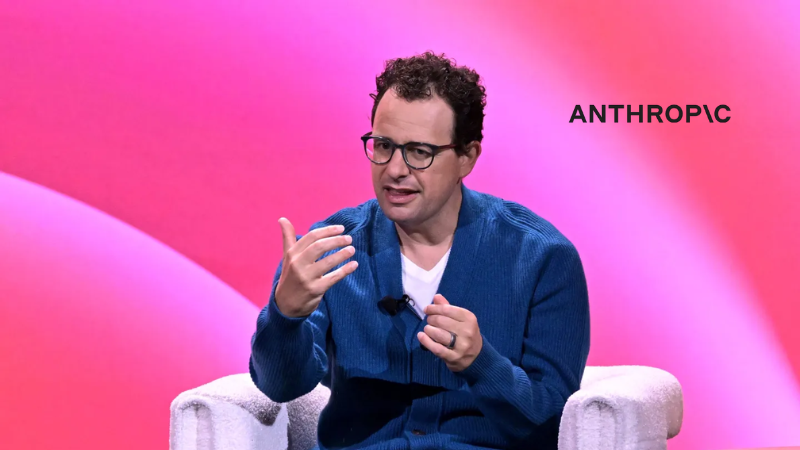
Anthropic is a San Francisco-based AI safety and research company best known for its Claude family of models. Founded in 2021 by siblings Dario Amodei and Daniela Amodei, both former OpenAI executives, the company built its identity around being the more safety-focused alternative to its larger rival — and in 2026, that positioning started translating into real financial dominance.
What the company does: Anthropic develops and sells access to Claude, a family of large language models used for everything from customer support to enterprise software development. It has leaned hard into developer and enterprise tools rather than chasing consumer virality the way OpenAI has.
Key AI products or technologies: The Claude model family (including the Opus, Sonnet, and Haiku tiers), Claude Code for software development, and Claude Cowork, an agentic tool for broader knowledge work. The company has also signaled a new tier of models, Claude Mythos, aimed at pushing beyond its current frontier releases.
Why it stands out: Enterprise trust. Anthropic has built a reputation for being cautious about deployment and transparent about model limitations, which has made it the preferred vendor for many large organizations that can’t afford unpredictable AI behavior. That distinction matters because it’s shown up directly in revenue growth that’s outpaced the rest of the industry.
Who uses it? Enterprise software teams, developers building coding tools, and a growing base of global businesses using Claude for internal operations. Amazon, Microsoft and NVIDIA are all both investors in and infrastructure partners for the company.
Strengths:
- Fastest-growing revenue among frontier AI labs, with annualized run-rate revenue crossing $47 billion in May 2026
- Strong reputation for safety research and model transparency
- Broad backing from hyperscalers rather than reliance on a single cloud partner
Potential limitations: Like its competitors, Anthropic is spending enormous sums on compute to keep up with demand, and the company has publicly acknowledged struggling to serve peak-hour usage. Its consumer brand is also far less recognizable than ChatGPT’s, even as its enterprise numbers have overtaken OpenAI’s.
Best for: Enterprise deployments, regulated industries, software development teams, and any organization that prioritizes predictable, well-documented AI behavior over flashy consumer features.
Not every company on this list is building a chatbot for the masses, and Anthropic is the clearest example. In May 2026, it raised $65 billion in a Series H round that pushed its valuation to $965 billion — surpassing OpenAI’s $852 billion mark and making it, for the moment, the most valuable AI startup in the world. That’s a remarkable jump for a company that was valued at roughly $61.5 billion barely over a year earlier.
3. NVIDIA
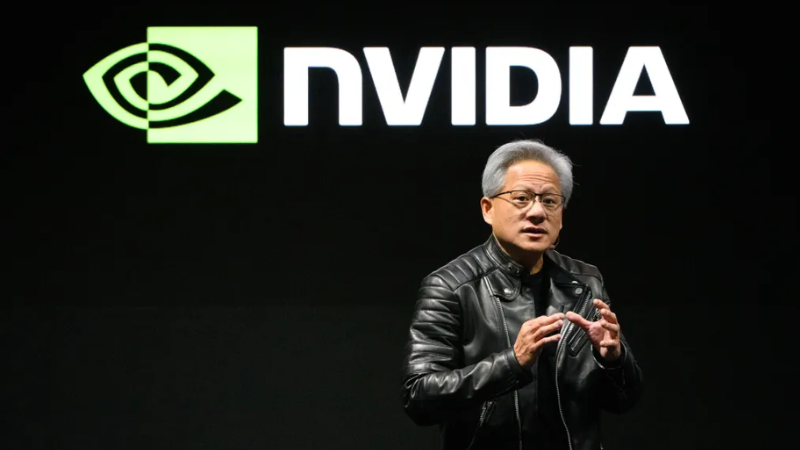
NVIDIA is a Santa Clara, California-based semiconductor company that designs the GPUs powering most of the world’s AI training and inference. Led by founder and CEO Jensen Huang, it’s arguably the single company every other name on this list depends on, directly or indirectly.
What the company does: NVIDIA designs graphics processing units originally built for video games that turned out to be extraordinarily good at the parallel math AI models require. Its CUDA software platform, which makes those chips programmable for AI workloads, has become the de facto standard most AI infrastructure is built on.
Key AI products or technologies: Its data center GPU lines — including the Blackwell and upcoming Vera Rubin architectures — along with CUDA, its networking technology from the 2020 Mellanox acquisition, and a growing portfolio of AI software and enterprise tools.
Why it stands out: NVIDIA doesn’t compete with OpenAI or Anthropic for chatbot users — it sells the hardware and software layer underneath nearly all of them, along with hyperscalers like Amazon and Microsoft. That neutral, foundational position is a genuinely different kind of moat than the one model developers have.
Who uses it? Practically every major AI lab and cloud provider in the industry, including OpenAI, Anthropic, Meta, Microsoft, and Amazon, all of which rely on NVIDIA chips for training and running their models.
Strengths:
- Dominant market position in AI training hardware, with data center revenue growing roughly 92% year over year
- CUDA’s entrenched software ecosystem, built up over more than a decade
- Direct financial stakes in several major AI labs, including OpenAI
Potential limitations: NVIDIA’s fortunes are tightly tied to continued AI infrastructure spending by a small number of very large customers, which creates concentration risk if capital expenditure growth slows. Export restrictions on advanced chips to China have also cut off a meaningful slice of its addressable market.
Best for: AI infrastructure, model training at scale, and any organization building or running its own AI systems rather than just using someone else’s product.
One thing that makes NVIDIA different from the rest of this list is that it doesn’t need you to know its name to benefit from it. It became the first company to reach a $4 trillion market capitalization in July 2025 and has traded above $4.7 trillion through much of 2026, with CEO Jensen Huang calling the current AI infrastructure buildout “the largest infrastructure expansion in human history.” For businesses, the practical takeaway is simple: nearly every AI product reviewed in this article runs, in some form, on NVIDIA silicon.
4. Google
Google, part of parent company Alphabet, is a Mountain View, California-based technology company whose AI efforts are led by CEO Sundar Pichai and Google DeepMind, its dedicated AI research division. After a rocky start following ChatGPT’s 2022 debut, Google has arguably closed the gap more than any other legacy tech company.
What the company does: Google develops the Gemini family of models and embeds them across nearly its entire product line — Search, Gmail, Android, Chrome, and Google Cloud — while also running foundational AI research through DeepMind.
Key AI products or technologies: The Gemini model series (including Gemini 3), AI Overviews in Search, Google Cloud’s Vertex AI platform, and Gemini Enterprise for business customers. Demis Hassabis, DeepMind’s longtime CEO, moved into a newly created chief scientist role at Alphabet in 2026, handing day-to-day DeepMind operations to new leadership.
Why it stands out: Distribution at a scale no pure-play AI lab can match. Gemini is built into Android’s billions of active devices and Google’s search results by default, which is a different kind of advantage than building the single best chatbot — it’s building the AI that shows up whether or not users go looking for it.
Who uses it? Billions of Search users encountering AI Overviews, Gemini app users (950 million monthly active users as of mid-2026), Android device owners, and enterprise customers running workloads through Google Cloud.
Strengths:
- Massive built-in distribution across Search, Android, and Chrome
- Deep AI research bench through DeepMind, including Nobel laureate leadership
- Google Cloud’s rapid growth, up 82% year over year in its most recent quarter
Potential limitations: Google has occasionally struggled with release timing on its most advanced models, and integrating AI into a search business that generates the bulk of Alphabet’s revenue creates a genuine tension between innovation and protecting an existing cash cow.
Best for: Consumers already inside the Google ecosystem, enterprise cloud customers, and businesses that want AI tightly integrated with existing productivity tools rather than a standalone chatbot.
That distinction matters more than it might seem. When Apple announced in January 2026 that Gemini would power future versions of Siri, Alphabet’s market cap crossed $4 trillion for the first time — a sign that investors see Google’s AI strategy as less about winning a single chatbot war and more about becoming the default AI layer underneath everyone else’s products too.
5. Microsoft

Microsoft is a Redmond, Washington-based technology company led by CEO Satya Nadella, whose AI strategy centers on Copilot, Azure AI infrastructure, and a long-running financial partnership with OpenAI. Few companies have benefited as directly from another AI lab’s success as Microsoft has from OpenAI’s.
What the company does: Microsoft embeds AI, largely powered by OpenAI’s models alongside its own in-house systems, across its productivity software (Microsoft 365 Copilot), developer tools (GitHub Copilot), and cloud platform (Azure AI Foundry).
Key AI products or technologies: Microsoft 365 Copilot, GitHub Copilot, Azure AI Foundry (which now hosts more than 11,000 models from providers including OpenAI, Anthropic, Meta, and xAI), and its own in-house MAI model family, unveiled in 2026 as part of a push to reduce reliance on any single outside partner.
Why it stands out: Microsoft holds a roughly 27% equity stake in OpenAI, worth an estimated $228 billion at OpenAI’s current valuation, giving it financial upside from a rival’s success even as it builds competing in-house models. That’s a hedge very few companies in tech have the balance sheet to pull off.
Who uses it? Enterprise customers running Microsoft 365 Copilot (more than 30 million paid seats as of mid-2026), developers using GitHub Copilot, and businesses building on Azure’s AI infrastructure.
Strengths:
- Deep enterprise relationships built over decades of Office and Windows adoption
- Direct financial exposure to OpenAI’s growth, alongside its own AI product line
- Azure crossed $100 billion in annual revenue in fiscal 2026, growing 43% year over year
Potential limitations: Microsoft’s AI revenue remains heavily dependent on OpenAI specifically — the company disclosed $24.1 billion in revenue from OpenAI alone in fiscal year 2026 — which raises questions about how diversified its AI business really is beneath the surface.
Best for: Enterprises already standardized on Microsoft 365 and Azure, developers using GitHub, and businesses that want AI folded into tools employees already use daily.
For businesses, the choice is less straightforward than it might look from the outside. Microsoft’s relationship with OpenAI loosened considerably in 2026 — the company’s license to OpenAI’s technology is now non-exclusive and OpenAI can serve its products through other cloud providers.
That shift signals Microsoft is deliberately positioning itself as a neutral AI marketplace rather than a single-model shop, even while its financial fortunes remain closely tied to OpenAI’s.
6. Amazon
Amazon is a Seattle-based technology and e-commerce company whose AI strategy runs primarily through Amazon Web Services (AWS), led by CEO Andy Jassy. Rather than positioning a single flagship chatbot as its centerpiece, Amazon has built its AI business around infrastructure, model access, and strategic investment.
What the company does: Amazon provides AI infrastructure and model access through AWS Bedrock, which lets businesses run models from multiple providers — including Anthropic’s Claude — on Amazon’s cloud. It also designs its own AI chips and has made major investments in outside AI labs.
Key AI products or technologies: AWS Bedrock, Trainium AI training chips, Amazon Q for enterprise use, and Alexa+, its AI-upgraded voice assistant. Amazon is also one of Anthropic’s largest investors and a major infrastructure partner.
Why it stands out: Amazon’s approach is deliberately model-agnostic. Rather than betting everything on one AI lab, it gives AWS customers a choice of models to build with, while also developing custom silicon aimed at reducing dependence on NVIDIA GPUs for at least some workloads.
Who uses it? AWS’s enterprise customer base, which spans nearly every industry, along with consumers using Alexa+ and businesses building custom AI applications on Bedrock.
Strengths:
- Massive existing cloud customer base through AWS
- Deep financial and infrastructure ties to Anthropic, including committed funding as part of Anthropic’s Series H round
- In-house chip development through Trainium, reducing reliance on third-party GPU supply
Potential limitations: Amazon doesn’t have a single standout consumer AI product with the mindshare of ChatGPT or Gemini, and its multi-model strategy, while flexible, can make its AI identity less distinct to outside observers than more focused competitors.
Best for: Businesses already built on AWS, developers who want the flexibility to choose between multiple foundation models, and enterprises prioritizing infrastructure control over a single branded assistant.
Amazon’s bet is essentially that owning the plumbing matters more than owning the brand name people type into a search bar. Whether that turns out to be right will say a lot about how enterprise AI spending settles out over the next few years — plenty of businesses want AI capability without necessarily wanting to commit to one lab’s roadmap.
7. Meta
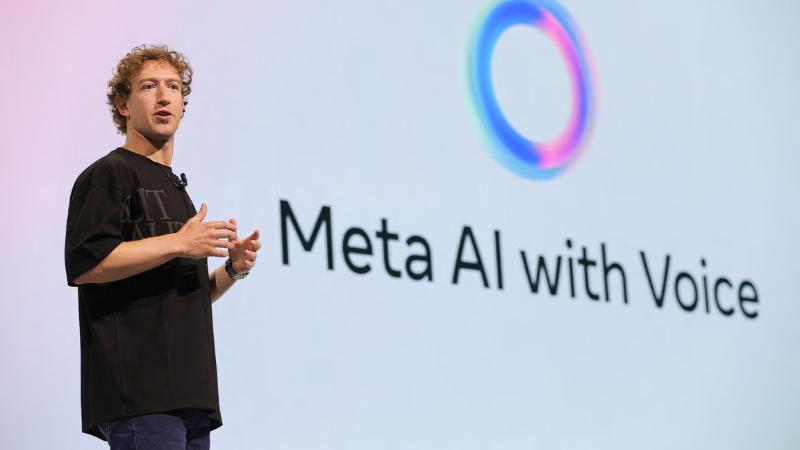
Meta is a Menlo Park, California-based technology company led by CEO Mark Zuckerberg, best known in AI circles for its open-weight Llama models and, more recently, a costly pivot toward proprietary “superintelligence” development.
What the company does: Meta builds AI models that power its Meta AI assistant across Facebook, Instagram, WhatsApp, and its Ray-Ban Meta smart glasses, while also historically releasing open-weight models that outside developers can download and modify.
Key AI products or technologies: The Llama model family, Meta AI (the consumer assistant), and newer models like Muse Spark developed by Meta Superintelligence Labs, the unit Zuckerberg formed in 2025 after recruiting Scale AI co-founder Alexandr Wang and researchers from OpenAI, Anthropic, and Google.
Why it stands out: Distribution through its existing social apps. Meta doesn’t need to convince billions of people to download a new app — it can put an AI assistant directly inside Facebook, Instagram, and WhatsApp, platforms people already use every day.
Who uses it? Meta AI is available to users across Meta’s family of apps, giving it enormous potential reach, alongside developers who use Meta’s open-weight models for their own projects.
Strengths:
- Built-in access to billions of users across its existing social platforms
- Major new compute partnerships, including a $100 billion multi-year infrastructure deal with AMD
- A recruiting effort that brought in senior AI talent from nearly every major competitor
Potential limitations: Meta’s Llama 4 models drew a lukewarm reception from developers in 2025 for underperforming on coding and reasoning tasks, and the company has since been walking a public balancing act between its historical open-source commitment and a shift toward proprietary models it can charge for.
Best for: Developers who want customizable, open-weight models, and consumers who prefer AI features built directly into apps they’re already using rather than a separate assistant.
That is where the comparison gets interesting, because Meta is genuinely trying to have it both ways. In an August 2026 manifesto, Zuckerberg argued for “distributing” AI capability widely rather than letting it concentrate in a handful of companies, even as Meta itself pours tens of billions of dollars into proprietary model development that looks a lot like what its rivals are doing.
8. xAI

xAI is Elon Musk’s artificial intelligence company, originally founded in 2023 with the stated goal of understanding “the true nature of the universe.” As of February 2026, it operates as a wholly owned subsidiary of SpaceX following an all-stock merger — an unusual corporate structure that sets it apart from every other company on this list.
What the company does: xAI builds Grok, a conversational AI model deeply integrated with X (formerly Twitter), giving it access to real-time social data that most competitors can’t easily replicate.
Key AI products or technologies: The Grok model family (currently Grok 4.5), SuperGrok consumer subscriptions sold through the X app, and the Colossus supercomputer cluster used for training. xAI is also exploring “world models” for gaming and robotics applications.
Why it stands out: Real-time data access through X, plus Musk’s broader ecosystem of Tesla and SpaceX, gives xAI potential integration points — from vehicle assistants to robotics — that standalone AI labs don’t have as directly.
Who uses it? Grok has roughly 117 million monthly active users as of early 2026, primarily through X integration, alongside a smaller base of API and enterprise customers.
Strengths:
- Exclusive access to X’s real-time public data stream
- Backing from SpaceX’s capital base and infrastructure following the February 2026 merger
- Cross-platform potential across Musk’s other companies, including Tesla
Potential limitations: Grok’s revenue and market share trail well behind ChatGPT, Gemini, and Claude — it holds roughly 2.8% of global AI chatbot web traffic, according to third-party estimates — and every one of xAI’s original 11 co-founders had left the company by early 2026, leaving Musk as the only remaining member of the founding team.
Best for: Users already active on X who want an AI assistant with real-time social context, and businesses interested in Musk’s broader ecosystem of products.
The interesting part is the structural change. SpaceX acquired xAI in an all-stock deal valuing the combined entity at roughly $1.25 trillion, and the merged company began trading on Nasdaq under the ticker SPCX in June 2026. That means investor exposure to Grok now comes bundled with SpaceX’s rocket and satellite business rather than through a standalone AI stock — a genuinely different arrangement from anything else on this list.
9. Palantir

Palantir Technologies is a data analytics and AI software company, historically associated with government and defense work, led by CEO Alex Karp. It has increasingly repositioned itself as critical AI infrastructure for large, high-stakes organizations rather than a niche government contractor.
What the company does: Palantir builds software that connects an organization’s data to AI models through what it calls an “ontology” layer, letting government agencies and enterprises apply large language models to their own operational data with governance and auditability built in.
Key AI products or technologies: Gotham (built for defense and intelligence operations), Foundry (aimed at commercial clients), and the Artificial Intelligence Platform (AIP), which connects third-party LLMs to client data rather than building Palantir’s own foundation models.
Why it stands out: Palantir doesn’t compete head-on with OpenAI or Anthropic for model supremacy — instead, it focuses on being the layer that makes any model usable and controllable inside a large, security-conscious organization, which is a genuinely different value proposition.
Who uses it? U.S. government and defense agencies (including a U.S. Army contract worth up to $10 billion over ten years) and a rapidly growing base of commercial enterprise customers, with U.S. commercial revenue up 149% year over year as of its most recent quarter.
Strengths:
- Deep, longstanding relationships with U.S. government and defense customers
- Rapid commercial revenue growth, with full-year 2026 revenue guidance raised to between $8.15 billion and $8.158 billion
- A model-agnostic architecture that avoids locking customers into a single AI provider
Potential limitations: Palantir’s close association with government and defense contracts draws periodic public scrutiny, and its valuation, trading at a steep multiple to revenue, has made the stock notably volatile.
Best for: Government agencies, defense contractors, and large enterprises that need AI tightly integrated with existing operational data under strict governance requirements.
Not every company on this list is building a chatbot, and Palantir might be the clearest example of that. CEO Alex Karp has been vocal about wanting competition among AI model providers rather than dependence on any single lab, arguing that open-weight models need to keep pace with proprietary ones “if we’re going to keep model companies honest.” That philosophy shapes Palantir’s entire product design: it’s built to plug into whichever model a customer trusts, not to replace them.
10. IBM
IBM is an Armonk, New York-based technology company led by CEO Arvind Krishna, focused on bringing AI into large, regulated enterprises through its watsonx platform. It’s the most legacy-institutional name on this list, and that’s largely the point of its current AI strategy.
What the company does: IBM builds enterprise AI tools designed for hybrid-cloud environments, where companies want AI capability without giving up control over sensitive data — a common requirement in banking, healthcare, and government.
Key AI products or technologies: The watsonx platform (covering model training, data governance, and AI deployment), Granite, IBM’s own family of open-source foundation models, and consulting services that help large organizations actually implement AI systems rather than just license them.
Why it stands out: IBM isn’t trying to win the race for the most capable frontier model. Its pitch is trust and governance — helping heavily regulated industries deploy AI responsibly, with clear data lineage and compliance built in, rather than chasing raw model performance.
Who uses it? Large enterprises in banking, insurance, healthcare, and government that need AI deployed within strict compliance and data-residency requirements, often alongside long-running IBM infrastructure relationships.
Strengths:
- Decades of enterprise trust in regulated industries
- A governance-first approach to AI deployment that appeals to risk-averse customers
- Open-source Granite models that give enterprises more control over customization
Potential limitations: IBM’s models generally aren’t considered frontier-level compared to Anthropic, OpenAI, or Google, and the company’s AI narrative gets less mainstream attention than flashier consumer-facing competitors — even though its enterprise footprint remains substantial.
Best for: Large regulated enterprises, government agencies, and organizations that need AI woven into existing hybrid-cloud and compliance infrastructure rather than a standalone consumer product.
IBM’s approach is a useful reminder that “leading AI company” doesn’t have to mean “biggest chatbot.” For a bank or hospital system that can’t risk sending sensitive data to an unfamiliar vendor, IBM’s decades of enterprise relationships and compliance tooling can matter more than raw model benchmarks.
Comparison Table
| Company | Main AI Focus | Key AI Product/Technology | Best For | Headquarters |
|---|---|---|---|---|
| OpenAI | Consumer & developer generative AI | ChatGPT, GPT models, Codex | General consumers, developers | San Francisco, CA |
| Anthropic | Enterprise-grade generative AI | Claude, Claude Code, Claude Cowork | Enterprises, software teams | San Francisco, CA |
| NVIDIA | AI chips & infrastructure | Blackwell/Vera Rubin GPUs, CUDA | AI infrastructure, model training | Santa Clara, CA |
| Google (Alphabet) | Integrated consumer & cloud AI | Gemini, AI Overviews, Vertex AI | Search users, cloud customers | Mountain View, CA |
| Microsoft | Enterprise productivity AI | Copilot, Azure AI Foundry | Enterprises on Microsoft 365/Azure | Redmond, WA |
| Amazon | AI cloud infrastructure | AWS Bedrock, Trainium chips | AWS-based businesses, developers | Seattle, WA |
| Meta | Social & open-weight AI | Llama models, Meta AI assistant | Developers, social app users | Menlo Park, CA |
| xAI | Real-time social-data AI | Grok, Colossus supercomputer | X users, Musk ecosystem integration | San Francisco Bay Area, CA |
| Palantir | AI-driven data platforms | Gotham, Foundry, AIP | Government, large enterprises | Denver, CO |
| IBM | Regulated enterprise AI | watsonx, Granite models | Banking, healthcare, government | Armonk, NY |
Ranking Methodology
This ranking isn’t meant to be treated as an absolute, unarguable truth — a different methodology could easily produce a different order. The companies above were evaluated on a mix of factors: technological impact and model quality, real-world adoption, revenue and financial scale, research strength, influence over AI infrastructure and overall relevance to the broader U.S. AI ecosystem.
A list weighted purely toward consumer chatbot usage would look different from one weighted toward enterprise revenue and a list built purely around funding size would look different again. The goal here was balance across those dimensions rather than optimizing for any single one.
FAQs
There’s no single “best” — it depends on what you need. OpenAI has the most recognizable consumer product, Anthropic has the fastest enterprise revenue growth and currently the highest valuation among AI labs, and NVIDIA arguably has the most structurally important position since nearly every other company on this list depends on its chips.
As of mid-2026, Anthropic holds the title of most valuable private AI startup, at a $965 billion valuation following its May 2026 Series H round, having surpassed OpenAI’s $852 billion valuation from earlier that year. By market capitalization among publicly traded companies, NVIDIA and Alphabet are both in the multi-trillion-dollar range.
The most influential U.S. AI companies right now are OpenAI, Anthropic, NVIDIA, Google, Microsoft, Amazon, Meta, xAI, Palantir, and IBM. Each occupies a different part of the AI stack, from foundation models to chips to enterprise deployment.
OpenAI, Anthropic, and Google DeepMind are generally viewed as leading frontier model development, while NVIDIA leads the hardware layer that makes that development possible. Meta and Microsoft are also investing heavily in their own in-house models.
OpenAI, largely because ChatGPT was the product that introduced generative AI to a mainstream audience in late 2022. Anthropic’s Claude and Google’s Gemini have both closed much of that mindshare gap since, particularly in enterprise settings.
Anthropic is OpenAI’s closest rival across both consumer and enterprise use cases. Google’s Gemini competes through unmatched distribution via Search and Android, xAI’s Grok competes through native integration with X, and Meta’s open-weight Llama models compete by commoditizing the base layer that smaller developers build on.
OpenAI, Anthropic, NVIDIA, Google, and Meta are all headquartered in or around the San Francisco Bay Area, making it the densest concentration of major AI companies in the country. Microsoft (Redmond, WA) and Amazon (Seattle, WA) are the notable exceptions based in the Pacific Northwest, while Palantir is based in Denver and IBM in New York.
Anthropic and Microsoft are generally viewed as strong choices for enterprise deployment, given Anthropic’s safety-focused positioning and Microsoft’s deep integration with existing business software. IBM is a strong option specifically for regulated industries like banking and healthcare, and Palantir stands out for organizations needing AI tied tightly to their own operational data.
Yes, though not in the same sense as OpenAI or Anthropic. NVIDIA doesn’t build consumer-facing chatbots; it designs the GPUs and software (CUDA) that train and run the vast majority of AI models built by other companies, making it arguably the most structurally important company in the industry.
NVIDIA is the dominant chip designer for AI workloads industry-wide. Amazon (Trainium), Google (TPUs), and Microsoft have all developed their own in-house AI chips as well, largely to reduce dependence on NVIDIA for at least a portion of their compute needs.
Anthropic’s IPO timeline is worth watching closely, given its rapid revenue growth and new valuation lead over OpenAI. xAI’s unusual structure as a SpaceX subsidiary also makes it an interesting case, since investor exposure to Grok now comes bundled with a much larger, newly public rocket company.