Paris and San Francisco-based AI startup Physicl has raised $10 million in seed funding led by Inovia Capital, with participation from US Venture Partners. The company will use the funding to expand its team and develop its platform for generating synthetic training data for robotics, autonomous systems and physical AI models.
Alongside the funding announcement on November 6, 2026, Physicl also launched Studio, its first application designed to help AI researchers create realistic training environments and generate synthetic data for physical AI.
The platform focuses on difficult real-world situations that robots and autonomous systems often struggle to understand. These include objects hidden behind other items, changing shadows, cluttered surfaces and incorrectly positioned objects. Such situations are difficult to capture repeatedly in real-world environments, making it challenging for developers to collect enough training data.
Physicl aims to address this problem by allowing researchers to create and modify realistic 3D environments. Through Studio, users can describe a situation in simple language, generate a matching scene, adjust different conditions and export synthetic images or videos for model training.
The platform includes a library of 10,000 environments and 100,000 3D assets. Users can modify lighting, objects, materials, camera positions and other environmental conditions to create different training scenarios. It also generates detailed information such as depth maps, object segmentation and camera positions directly from the underlying 3D scenes.
Founded by CEO Alex de Vigan, Physicl builds on his decade of experience developing 3D technologies through his previous company, nfinite. The technology was originally developed to help retailers create realistic 3D product visuals for online shopping. De Vigan is now applying that expertise to help AI systems better understand physical environments and interact with objects.
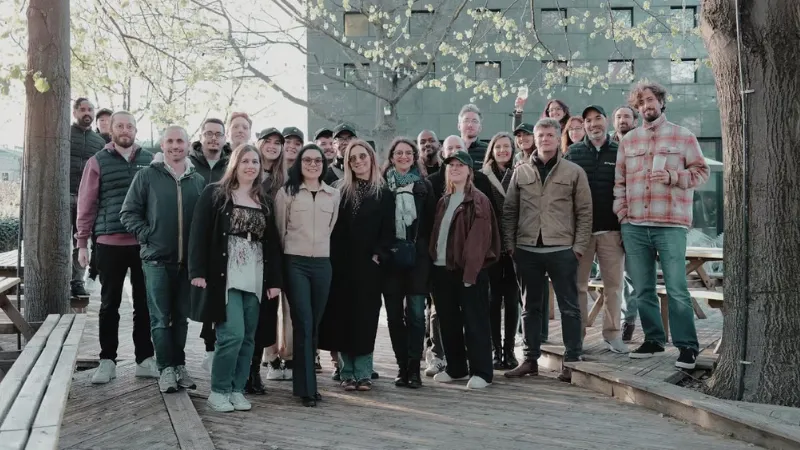
The company has approximately 30 employees across Paris, San Francisco and New York, with expertise in 3D technology, simulation and machine learning.
Physicl has already worked with SpAItial, a company developing world models. According to Physicl, SpAItial reduced its 3D reconstruction error on real-world rooms by more than half after training with its synthetic data. The evaluation involved the team led by SpAItial CEO and Technical University of Munich professor Matthias Niessner.
With its new funding, Physicl aims to improve Studio and expand its synthetic data capabilities. The platform is currently available in beta, with access opening gradually to research laboratories, universities and companies developing robotics and AI models.