Cambridge Heavy Industries, a Massachusetts-based startup developing compact fusion machines, has raised $6.2 million in seed funding to build its first compact fusion reactor and advance its fusion technology.
The funding round was led by Azolla Ventures, with participation from Overlay, the Mass Clean Energy Center, Neta Foundation, the Rothrock family and P3A.
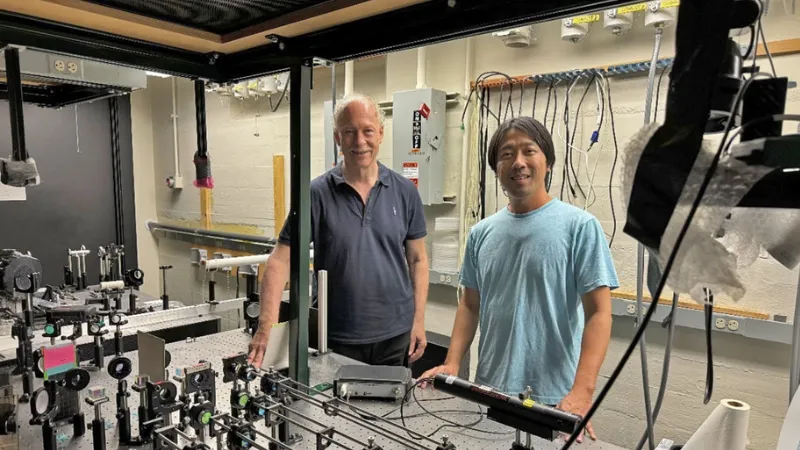
The company has emerged from stealth with plans to establish its first reactor at its facility in Massachusetts. The fresh capital will support equipment purchases, including an ultrafast laser, optical components and neutron diagnostic systems. The company will also expand its team.
Cambridge Heavy Industries Develops Compact Fusion Technology
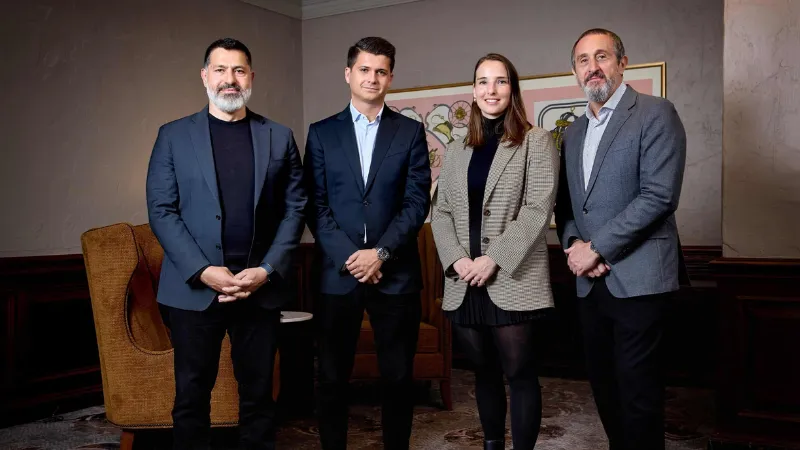
Founded by CEO Dr. Yun Kai, along with co-founders Raffi Freeman, Professor Keith Nelson and Dr. Steve Kooi, Cambridge Heavy Industries is developing compact machines that use commercial lasers to create the extreme pressure and temperatures required for fusion-related processes.
“Cambridge Heavy Industries was inspired by decades of research and a clear vision for applying novel engineering to the proven science of inertial confinement fusion, making it more compact and efficient,” said Dr. Yun Kai, co-founder and CEO of Cambridge Heavy Industries. “Fusion power leaders have a tritium supply problem that could significantly slow down the sector’s growth. Our technology is in the unique position to solve this challenge. We are appreciative of our investors for their financial and operational support in bringing us to this important milestone.”
The technology is designed to support the production of rare isotopes through neutron bombardment, with the long-term goal of advancing fusion power.
Unlike conventional fusion research, which can involve lengthy research and development cycles, the company’s compact machines are designed to allow testing and upgrades on a weekly basis. The system also relies on commercially available equipment rather than requiring highly customised components.
According to the company, its advances in shockwave science have achieved 400 times higher compression efficiency compared with previous laser-based fusion efforts, while requiring significantly lower capital expenditure.
Its prototype, roughly the size of two dinner tables, has reportedly achieved pressures of up to 350 gigapascals (GPa) using only tens of millijoules of energy. This pressure is comparable to that found at the centre of the Earth.
“Our investment thesis in fusion has focused on reactor designs with fast and inexpensive learning cycles. The world may never see benefits from fusion if it requires multibillion-dollar science projects that take decades to iterate,” said Matthew Nordan, co-founder and General Partner of Azolla Ventures. “Cambridge Heavy Industries’ technology can be demonstrated on a benchtop and assembled in days using standard optical components. The same rapid test/fail/fix model is what brought us modern space and defense technologies; we see it as a promising approach to make fusion viable.”
Focus on Tritium Production and Other Commercial Applications
Cambridge Heavy Industries plans to configure its first systems to produce tritium, a rare and radioactive isotope of hydrogen used in fusion research.
Tritium is an important fuel component for several fusion reactor designs, and the company points to global supply shortages as a potential commercial opportunity.
Beyond isotope production, Cambridge Heavy Industries is exploring other applications for its neutron-source technology, including neutron imaging and material defect engineering.
These applications could support research and development across industries that require advanced materials testing and analysis.
Startup Emerges From MIT Research
Cambridge Heavy Industries was spun out of the Nelson Lab at the Massachusetts Institute of Technology (MIT). The company builds on more than 20 years of research into materials under extreme conditions, including high-intensity shock.
CEO Dr. Yun Kai previously worked as a research scientist at MIT. The wider founding team brings together scientific and academic expertise, alongside engineering and financial experience from deep-tech companies.
With the new funding, Cambridge Heavy Industries plans to move from prototype development towards building its first compact fusion reactor. The company is also hiring research and development engineers, fusion researchers, simulation scientists and business development professionals.
The investment will support its efforts to develop commercial applications for compact fusion technology, starting with isotope production and neutron-based systems.