Danish FashionTech startup Rodinia Generation, which develops technology for clothing production, has raised €4 million in new funding.
The company will use the funding to move into its next stage of growth, including setting up its first commercial-scale production facility in Portugal, which is planned for 2027.
The funding round was led by Vitamin°C, with continued support from existing investors Climentum Capital and EIFO.
“Manufacturing closer to demand has never been more strategically valuable than it is right now,” says Trine Young, founder and CEO of Rodinia Generation. “The brands that produce with us have no need to predict what will sell months in advance. They also don’t need to produce at high volumes to reach better unit economics. They can react to demand in days instead of months, sell more at full price and manage inventory and cash much more efficiently – and on top of all this, they can do so with a much lower environmental footprint.”
“Rodinia is tackling one of the largest industries in the world with a fundamentally different manufacturing model. What attracted us is not sustainability alone, but the potential to change the economics of apparel production by combining automation, flexi bility and local manufacturing at commercial scale,” adds Nathalie Moral, Founding Partner at Vitamin°C.
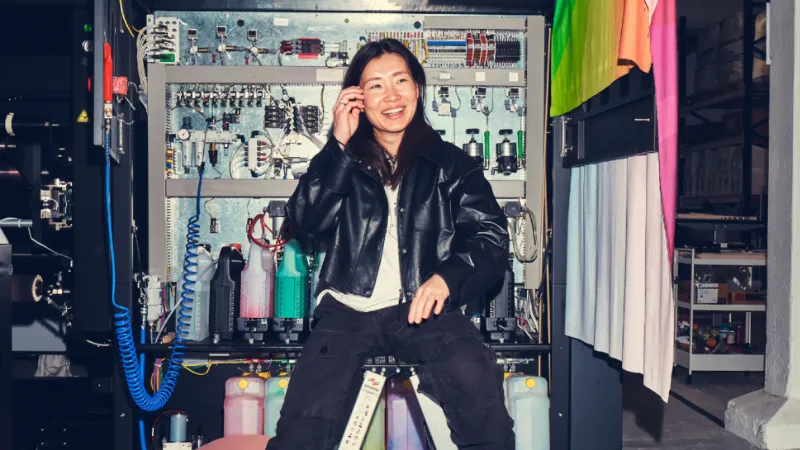
Founded in 2017, Rodinia Generation is a technology company based in Copenhagen, Denmark. The company was founded by entrepreneur Trine Young and focuses on developing technology for the clothing production industry.
“We have demonstrated in Copenhagen that a single O-factory line can produce 80% of clothing categories, including evening dresses, formal shirts, football tees, swimwear and childrenswear, just to mention a few of the categories that have already achieved competitive margins. The investment allows Rodinia to increase production capacity for existing and new brands with the opening of our industrial-scale O-factory in Portugal,” says Trine.
According to the company, automating fashion production is becoming more difficult. Unlike traditional manufacturing, fashion brands now produce a wide range of different designs instead of making large quantities of the same product.
Brands need to quickly change their products, create thousands of different styles, and produce smaller batches. They also need to keep production costs competitive while making products in shorter production cycles.