| Category | Details |
|---|---|
| Company | Embedd |
| Location | London, UK |
| Funding | €2.3 million ($2.7 million) pre-Seed |
| Lead Investor | Seedcamp |
| Other Investors | Cocoa, Connect Ventures, 2100 Ventures, Vesna Capital, U.ventures, Underline Ventures, Common Magic and Roosh Ventures |
| Founders | Michael Lazarenko, Maxim Gorinov and Valentin Gololobov |
London-based startup Embedd has raised €2.3 million ($2.7 million) in pre-Seed funding. The company is building infrastructure for physical AI, which helps AI systems work with physical machines and equipment.
The funding round was led by Seedcamp. Other investors included Cocoa, Connect Ventures, 2100 Ventures, Vesna Capital, U.ventures, Underline Ventures, Common Magic and Roosh Ventures.
Embedd will use the new funding to develop its platform further and expand its work with semiconductor companies.
Michael Lazarenko, co-founder and CEO of Embedd, said, “The next wave of AI will power factories, vehicles, robots and critical infrastructure, but today, every change in hardware creates huge complexity for software teams and that friction is already massively slowing innovation. We built Embedd to address exactly that, and we’re thrilled to have the backing of Seedcamp as we scale.”
Embedd was founded by Ukrainian tech entrepreneurs Michael Lazarenko, Maxim Gorinov and Valentin Gololobov.
The founders previously ran a hardware company that faced chip shortages during COVID-19 and was later disrupted by Russia’s invasion of Ukraine.
While working on hardware, they often had to rewrite software for new chips. They realised this was a major problem that could become even bigger as AI moves into the physical world.
Embedd says intelligent machines often need to work with many different chips. These chips do not use the same language, making it difficult for software to communicate with them.
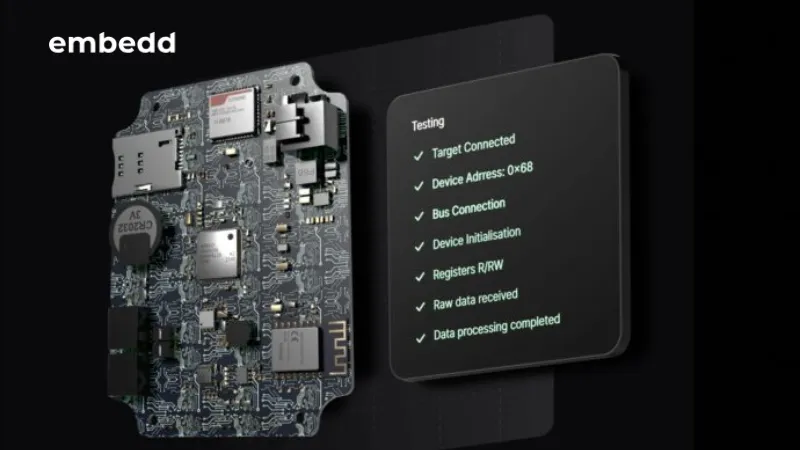
The startup uses digital twins and AI agents to solve this problem. It creates a digital version of the hardware and gives its AI systems the information they need to understand and integrate the chip.
Embedd’s technology can then generate the code needed to connect the chip with software. This could save engineers from reading thousands of pages of technical documents and writing the code manually.