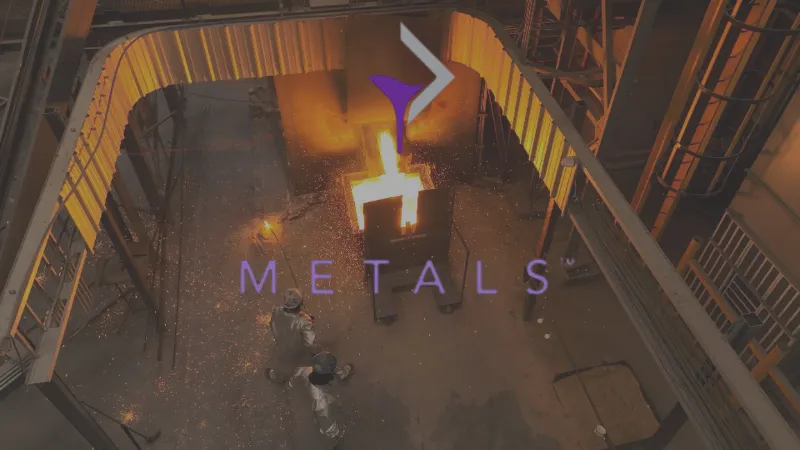
Hertha Metals, a steel technology company developing a lower-cost process for domestic iron and steel production, has raised $133.65 million in Series A funding.
The round includes a $65 million equity investment from the U.S. Government through its Industrial Base Analysis and Sustainment (IBAS) program, in partnership with the Economic Defense Unit.
The financing was co-led by Khosla Ventures and Doerr Capital, with participation from CEV, Pear Ventures, Gates Frontier, Niterra SUISO no MORI Fund, Toyota Ventures and Siemens Financial Services.
Hertha Metals will use the funding to build Hertha Chalyx, a new iron and steel production facility designed to produce 10,000 tonnes of steel-grade and magnet-grade high-purity iron.
The Chalyx facility will operate alongside Hertha’s existing Pi100 pilot plant and is planned as part of an integrated iron and steel innovation complex.
The project is intended to expand domestic production of materials used by U.S. steel, magnet and defense manufacturers.
High-purity iron is an important material in the production of rare-earth permanent magnets. According to Hertha, the U.S. currently imports almost all of the high-purity iron used in these magnets.
NdFeB magnets contain roughly 70% high-purity iron by weight, making domestic production of the material important to efforts to build a U.S.-based rare-earth magnet supply chain.
Hertha says its Chalyx facility will produce high-purity iron domestically, supporting a supply chain that can extend from U.S. mining through manufacturing.
The project also aligns with efforts to expand U.S.-made magnet production under the Defense Federal Acquisition Regulation Supplement (DFARS).
Hertha Metals has developed its Flex-HERS process as an alternative to the traditional multi-step, coal-dependent blast furnace method.
The process uses a single continuous reactor that can process different grades of iron ore while using natural gas or hydrogen as a reductant.
According to the company, the technology can produce iron and steel at 25% lower production costs than conventional blast furnaces.
Hertha also says the process can reduce emissions by approximately 50% when using natural gas and by up to 98% when using hydrogen.
Hertha currently operates a 360-ton-per-year demonstration facility in Conroe, Texas.
The company is also working through a supplier qualification process with major U.S. rare-earth magnet producers.
Hertha plans to break ground on the Chalyx facility this year. Once operational, the integrated facilities are expected to provide domestic sources of steel and high-purity iron for manufacturers.
The company says the project will support domestic manufacturing, create jobs and strengthen supply chains for steel, rare-earth magnets and defense-related industries.