Think about the drawer in your home or office where old electronics slowly disappear.
There may be an old mobile phone that you stopped using years ago. A charger that no longer fits your current phone. A laptop that became too slow. A pair of broken earphones. Perhaps an old printer sitting in a corner because nobody is quite sure what to do with it.
Most of us have been there.
We don’t usually think of these items as waste when we first put them aside. We think, “I might need this one day.”
Months turn into years, and eventually the drawer, cupboard, storage room, or office corner becomes a collection point for electronics that nobody uses anymore.
This is where WEEE comes in.
What Does WEEE Mean?
WEEE stands for Waste Electrical and Electronic Equipment.
In simple terms, WEEE refers to electrical and electronic products that have reached the end of their useful life and are no longer wanted, needed, or usable.
For example:
- An old mobile phone replaced by a newer model
- A laptop that no longer works
- A broken television
- An outdated computer
- A damaged charger
- An old refrigerator being replaced
- A printer that has been sitting unused for years
All of these can become WEEE.
The term may sound technical, but the idea is simple:
When something that needs electricity, a battery, or electronic components is no longer useful and is being discarded, it may become WEEE.
WEEE is also commonly called e-waste or electronic waste.
A Simple Real-Life Example of WEEE
Imagine you are moving to a new home.
While packing, you find:
- Three old mobile phones
- Two chargers
- A broken laptop
- Old headphones
- A printer you haven’t used for years
Your first thought might be to put everything into a bag and throw it away with the rest of the household waste.
But electronics are different from ordinary waste.
That old laptop may contain metals and other materials that can potentially be recovered. The phone may contain valuable components. The battery inside one of the devices may require separate handling.
This is why WEEE management and recycling are important.
What Types of Products Become WEEE?
WEEE includes a wide range of electrical and electronic products.
1. IT and Computer Equipment
This includes:
- Desktop computers
- Laptops
- Monitors
- Keyboards
- Computer mice
- Servers
- Hard drives
- Networking equipment
In an office, old IT equipment can build up surprisingly quickly. A company may replace dozens or even hundreds of computers over time.
One of the biggest concerns with this type of WEEE is not only recycling—it is also data security.
Before an old computer leaves a business, companies need to consider what information may still be stored on the device.
2. Mobile Phones and Small Electronics
These are probably some of the most common forms of WEEE.
Examples include:
- Smartphones
- Tablets
- Smartwatches
- Wireless earbuds
- Digital cameras
- Fitness trackers
Many people keep old phones even after upgrading. Sometimes the phone still works, but it is no longer being used.
Before recycling a phone, it is important to remove personal information, sign out of accounts, perform an appropriate reset, and remove SIM or memory cards.
3. Household Appliances
Large appliances can also become WEEE.
Examples include:
- Refrigerators
- Washing machines
- Dishwashers
- Microwaves
- Electric ovens
- Air conditioners
These items often require professional collection and recycling because they can contain different materials and components that should not simply be discarded.
4. Televisions and Entertainment Equipment
This includes:
- Televisions
- Speakers
- Gaming consoles
- DVD players
- Set-top boxes
- Streaming devices
An old television is a good example of how technology changes. A TV that once seemed expensive and modern can eventually end up unused in a storage room after being replaced by a newer model.
When that happens, it becomes part of the WEEE stream.
5. Chargers, Cables and Accessories
These are easy to forget.
Almost everyone has a collection of cables and chargers that they no longer use.
Examples include:
- Phone chargers
- Laptop chargers
- USB cables
- HDMI cables
- Power adapters
- Charging docks
They may look small and harmless, but when millions of people discard these products, they become a significant part of electronic waste.
6. Batteries and Battery-Powered Devices
Modern life depends heavily on batteries.
They can be found in:
- Phones
- Laptops
- Power banks
- Wireless earbuds
- Smartwatches
- Electric toys
- Other portable electronics
Batteries need special attention because damaged or improperly handled batteries can create safety risks.
They should not simply be treated like ordinary household rubbish.
WEEE Is More Common Than Most People Think
One reason WEEE is such a growing issue is that we use more electronics than ever before.
Think about the average home today compared with 15 or 20 years ago.
Today, one household may have multiple smartphones, laptops, televisions, smart devices, chargers, kitchen appliances, gaming devices, and battery-powered products.
The same is true for businesses.
An office may replace computers every few years. Mobile phones are upgraded. Servers become outdated. Printers are replaced. Networking equipment changes.
Every time equipment reaches the end of its useful life, there is an important question:
What happens to it next?
That question is at the centre of responsible WEEE management.
Why Can’t WEEE Just Go Into the Normal Bin?
The easiest option may seem to be throwing an old electronic item away with ordinary waste.
However, electronics are made from a mixture of different materials.
Depending on the product, these may include:
- Metals
- Plastics
- Glass
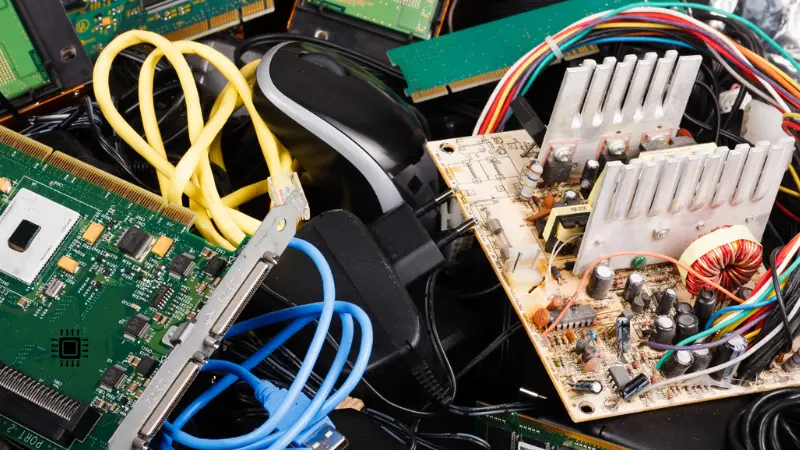
- Circuit boards
- Cables
- Batteries
- Electronic components
Some of these materials can potentially be recovered and used again.
Other components may require controlled handling.
When WEEE is properly collected and processed, materials can be separated and directed into appropriate recycling streams.
What Happens to WEEE After Collection?
Many people imagine that recycling means putting something into a recycling bin and forgetting about it.
In reality, professional WEEE recycling can involve several stages.
A typical journey may look like this:
Collection → Sorting → Data Handling → Dismantling → Material Separation → Recycling and Recovery
Collection
The process begins when unwanted electrical and electronic equipment is collected.
This can happen through:
- E-waste collection services
- Manufacturer take-back programs
- Retailer programs
- Recycling facilities
- Business collection services
Sorting
The equipment is then sorted according to its type.
For example, computers, cables, displays, appliances, and batteries may need different handling processes.
Data Security
For computers, laptops, servers, and storage devices, data security can be an important part of the process.
Businesses may need secure data erasure or physical data destruction before equipment is recycled or reused.
Dismantling
Equipment may be dismantled so that different components can be separated.
This can include:
- Circuit boards
- Cables
- Metals
- Plastics
- Screens
- Batteries
Material Recovery
Different materials can then be processed through appropriate recycling and recovery systems.
The goal is to recover useful materials wherever possible and handle remaining components responsibly.
WEEE Recycling Is Not Always the First Option
One important point is often overlooked:
Not every old electronic product should immediately be recycled.
Before recycling, ask:
Can it still be used?
If yes, continue using it.
Can it be repaired?
A repair may extend the life of the product.
Can someone else use it?
The item may be suitable for resale, donation, or reuse.
Is it beyond repair or no longer useful?
Then recycling may be the appropriate next step.
A simple way to remember this is:
Reuse first. Repair when possible. Recycle when necessary.
WEEE at Home vs WEEE in a Business
The basic idea is the same, but businesses often have additional responsibilities.
WEEE at Home
At home, WEEE might include a few old phones, chargers, laptops, or appliances.
The biggest challenges are usually:
- Knowing where to take the items
- Understanding what can be recycled
- Handling batteries correctly
- Protecting personal data
WEEE in Businesses
For businesses, the scale can be much larger.
A company may need to dispose of:
- Hundreds of laptops
- Desktop computers
- Servers
- Networking equipment
- Office phones
- Printers
- Monitors
In these situations, WEEE management may involve:
- Equipment inventory
- Data security
- Collection and transportation
- Reuse or refurbishment
- Recycling
- Documentation
This is why many businesses work with professional IT asset disposition and e-waste recycling providers.
What Should You Do With Your Old Electronics?
The next time you find an old electronic item, don’t immediately think:
“Where is the nearest bin?”
Instead, ask these questions:
1. Does it still work?
If yes, consider continuing to use it or giving it to someone who can.
2. Can it be repaired?
A simple repair could give the product a longer useful life.
3. Can it be sold or donated?
Working electronics may still have value.
4. Does it contain personal or business data?
If yes, protect or securely remove that information.
5. Does it contain a battery?
Check whether the battery needs separate handling.
6. Is it ready for recycling?
If yes, use an appropriate and authorized WEEE or e-waste collection and recycling service.
WEEE and the Circular Economy
WEEE is also connected to the idea of a circular economy.
Traditionally, products follow a simple pattern:
Make → Use → Throw Away
A circular approach aims to keep products and materials in use for longer.
This can involve:
Reuse → Repair → Refurbish → Recover → Recycle
For electronics, this means trying to extend the useful life of a product before treating it as waste.
When the product can no longer be used, recycling can help recover materials for future use.
Final Thoughts: WEEE Is Closer to Us Than We Think
WEEE may sound like an industry term, but almost everyone deals with it.
It might be the old phone in your drawer.
The broken laptop in your office.
The unused printer in a storage room.
Or the refrigerator being replaced in your home.
The moment we decide we no longer need an electrical or electronic product, we have a choice about what happens next.
We can leave it sitting unused for years.
We can throw it away without thinking.
Or we can ask a better question:
Can this product be reused, repaired, or responsibly recycled?
That simple question is where better WEEE management begins.
Because WEEE is not just about waste.
It is about how we deal with the technology we have finished using—and what we choose to do with the materials, products, and resources that remain.