
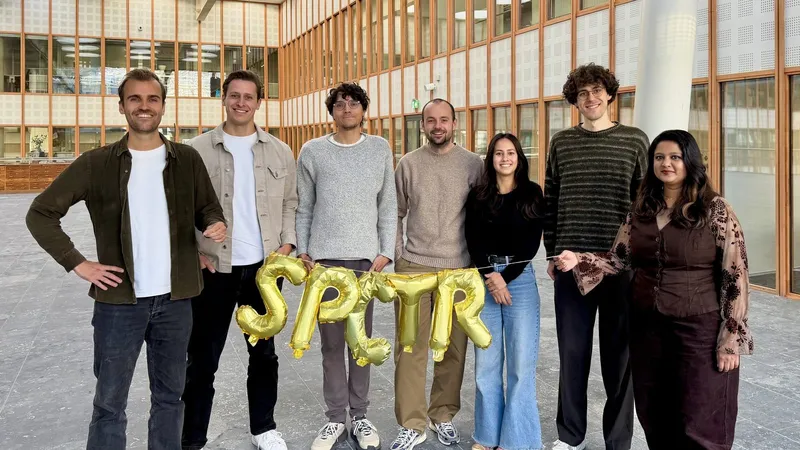
Dutch MedTech startup SPCTR, which develops AI-powered optical technology to help surgeons during cancer operations, has raised €2.8 million in funding. Its technology helps doctors check the edges of removed tissue during surgery to see whether any cancer cells may remain.
The funding came from several investors, including the VGZ Voorop in Zorg fund, Future Tech Ventures, the Investment and Development Agency for the Northern Netherlands (NV NOM), a group of angel investors and the European Just Transition Fund (JTF).
Wido Heeman, CEO and co-founder of SPCTR, “Surgeons have to judge during the operation whether they have removed enough tissue, and only find out days later whether they were right. With SPCTRone, we want to bring that answer into the operating room. This funding enables us to evaluate the technology in multiple hospitals and to further expand our team.”
Founded in 2025 by Wido Heeman and Rowan Timmermans, SPCTR is based in Utrecht and Groningen in the Netherlands. The company is developing an AI-powered imaging system to help surgeons check whether they have completely removed a tumour during breast cancer surgery.
During cancer surgery, doctors remove the tumour along with a small amount of healthy tissue around it. The goal is to remove all cancer cells while keeping as much healthy tissue as possible. However, doctors usually have to wait several days for a pathologist to examine the removed tissue and confirm whether all the cancer cells have been removed. If cancer cells are still found at the edges of the tissue, the patient may need another operation or additional treatment.
SPCTR has developed a system called SPCTRone, which combines optical imaging and AI to help surgeons check the removed tissue during the operation itself. This allows doctors to identify any remaining cancer cells and remove additional tissue immediately if needed, potentially avoiding another surgery later. Although the technology is being developed for different types of cancer, the company is initially focusing on breast cancer.
“The investment in SPCTR fits our ambitions for future-proof healthcare in several ways. If SPCTRone can lead to fewer re-operations and follow-up treatments in practice, this is not only better for the patient, but also contributes to the accessibility, affordability and sustainability of healthcare,” said Martijn Kers, Director of Innovation and Healthcare Policy, Coöperatie VGZ.
The company will use the new funding to prepare a follow-up study involving several hospitals, manufacture its first batch of devices and move closer to getting CE marking for its technology.