Lithium-ion battery recycling in the USA is becoming an important part of the country’s energy and manufacturing strategy. Electric vehicles are growing. Battery energy storage is expanding. Consumer electronics continue to generate millions of used batteries. At the same time the United States wants to reduce its dependence on imported battery materials.
Recycling offers a way to recover materials such as lithium, nickel, cobalt, copper and other valuable components from batteries that have reached the end of their useful life.
But battery recycling is not as simple as collecting an old battery and melting it down.
A modern lithium-ion battery recycling system involves collection, transportation, sorting, discharge, dismantling or shredding, material separation, black mass production and chemical refining. The final goal is to turn recovered materials back into usable battery materials.
The US battery recycling industry is also being shaped by federal funding, environmental regulations, transportation rules, state-level extended producer responsibility programs and tax incentives.
As of 2026 the US industry includes established recyclers and newer companies building commercial-scale facilities. Companies such as Redwood Materials, Li-Cycle, Ascend Elements, Cirba Solutions, American Battery Technology Company and Blue Whale Materials are among the notable names in the domestic battery recycling ecosystem. DOE materials also identify several of these companies as part of the US battery and critical-materials supply chain.
What is lithium-ion battery recycling?
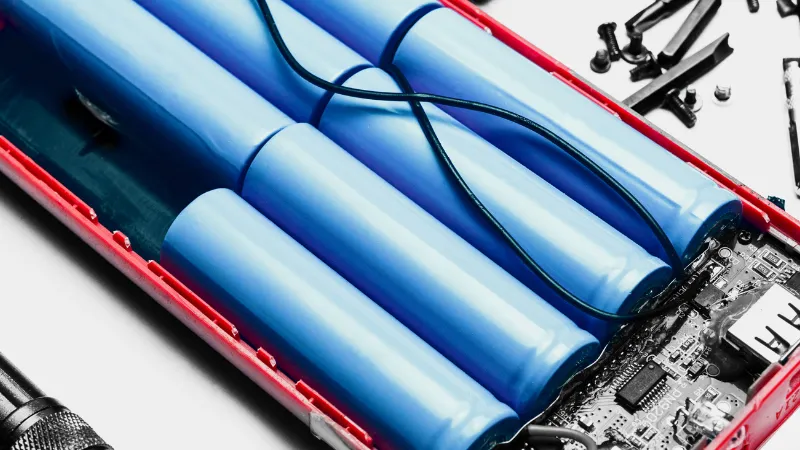
Lithium-ion battery recycling is the process of recovering useful materials from used or damaged lithium-ion batteries and returning those materials to the manufacturing supply chain.
These batteries are used in:
- Electric vehicles
- Hybrid vehicles
- Smartphones
- Laptops
- Power tools
- E-bikes and e-scooters
- Energy storage systems
- Industrial equipment
- Consumer electronics
A lithium-ion battery does not become useless simply because it can no longer provide enough power for its original application.
Some batteries can be reused or repurposed before they are recycled. For example an EV battery that is no longer suitable for automotive use may still have enough remaining capacity for stationary energy storage.
When reuse is no longer practical the battery can enter the recycling chain.
The objective is to recover valuable materials and avoid sending batteries to conventional waste streams.
The US EPA notes that lithium-ion batteries can present fire and hazardous-waste concerns when improperly discarded. It recommends careful management of lithium batteries at the end of their useful life.
Why is lithium-ion battery recycling important in the USA?
There are three major reasons.
1. Battery demand is increasing
The growth of electric vehicles and stationary energy storage is increasing demand for battery materials.
The US Department of Energy has described recycling as an important component of a domestic battery supply chain because recycled materials can supplement newly mined materials.
2. Batteries contain valuable materials
A used lithium-ion battery can contain:
- Lithium
- Nickel
- Cobalt
- Copper
- Aluminum
- Graphite
- Manganese
- Steel
The exact composition depends on the battery chemistry.
An NMC battery for example contains nickel, manganese and cobalt in the cathode. An LFP battery uses lithium iron phosphate and contains little or no nickel or cobalt.
This chemistry difference matters because the economic value of the recovered material can vary significantly.
3. Battery waste creates safety problems
Lithium-ion batteries can ignite when damaged or improperly handled.
A battery thrown into household garbage can end up in a waste collection truck or recycling facility where crushing and mechanical processing can create a fire.
EPA warns that improperly discarded lithium batteries can cause fires in waste management systems and threaten workers and first responders.
This makes proper collection more than an environmental issue.
It is also a fire prevention and public safety issue.
How does lithium-ion battery recycling work in the USA?
The exact process varies by recycler and battery chemistry.
A simplified US battery recycling process looks like this:
Collection → Transportation → Inspection → Discharge → Dismantling/Shredding → Separation → Black Mass → Chemical Refining → Battery Materials
Let’s look at each stage.
1. Battery collection
Everything starts with collection.
Batteries can come from several sources:
- EV manufacturers
- Automotive dealers
- Auto dismantlers
- Battery manufacturers
- Gigafactories
- Electronics manufacturers
- Consumer recycling programs
- Energy storage facilities
- Industrial customers
Manufacturing scrap is especially important because it is usually more predictable than end-of-life batteries.
Battery manufacturing generates defective cells, electrode scrap and other material that can enter the recycling stream.
The US EPA says batteries may pass through multiple collection and sorting facilities before reaching a recycling facility.
2. Battery inspection and sorting
Not every battery can be processed in exactly the same way.
Recyclers need to identify:
- Battery chemistry
- Size
- Form factor
- State of charge
- Physical condition
- Damage
- Manufacturer
- Pack configuration
Damaged batteries require special handling.
A battery that has been involved in an accident or fire can present a very different risk compared with an undamaged battery removed from an electronic device.
Sorting is therefore both an economic process and a safety process.
3. Discharging the battery
Before mechanical processing a battery may need to be electrically discharged.
The goal is to reduce stored electrical energy.
This step becomes more complicated with large EV packs and energy storage batteries.
Some modern recycling technologies are designed to process larger battery assemblies with less manual dismantling.
For example Li-Cycle says its Generation 3 Spoke technology can directly process full battery packs using submerged shredding technology.
4. Dismantling
Large battery packs can contain hundreds or thousands of cells.
An EV battery may include:
- Pack housing
- Cooling system
- Busbars
- Electronics
- Modules
- Cells
- Wiring
- Structural components
Some recyclers dismantle packs before processing.
Others are developing systems that can process packs with less manual disassembly.
This is one reason battery pack design has become important.
A battery that is easy to disassemble can potentially be easier and cheaper to recycle.
5. Mechanical shredding
After preparation the battery material can be mechanically processed.
Shredding breaks the battery into smaller particles.
The process can separate larger components such as:
- Steel
- Aluminum
- Copper
- Plastics
The remaining fine material contains valuable electrode materials.
This material is commonly called black mass.
What is black mass?
Black mass is an intermediate material produced from processed lithium-ion batteries.
It generally contains a concentrated mixture of battery materials.
Depending on chemistry it may contain:
- Lithium
- Nickel
- Cobalt
- Manganese
- Graphite
Black mass is not usually the final product.
It is better understood as a feedstock for further refining.
This distinction is important because people sometimes describe battery shredding as “battery recycling.”
Shredding is only one part of the recycling chain.
The higher-value step is recovering battery-grade materials from the black mass.
6. Black mass refining
Once black mass has been produced it can undergo additional processing.
There are two major approaches used across the industry:
Pyrometallurgy
This uses high-temperature processing.
The battery material is heated in a furnace and valuable metals are recovered.
The advantage is that pyrometallurgy can handle relatively mixed feedstocks.
The disadvantage is that the process can require significant energy and some materials such as lithium may require additional recovery steps.
Hydrometallurgy
Hydrometallurgy uses chemical solutions to dissolve and separate valuable metals.
It can be designed to recover materials such as:
- Lithium
- Nickel
- Cobalt
- Manganese
The recovered materials can then be converted into chemical forms suitable for battery manufacturing.
Li-Cycle’s planned Rochester Hub is an example of a hydrometallurgical refining approach. DOE describes its Spoke & Hub model as producing black mass at Spoke facilities before further processing at the Hub.
7. Direct recycling
There is another approach called direct recycling.
Instead of breaking battery materials all the way down into individual chemical elements, direct recycling attempts to preserve and restore valuable electrode materials.
This can potentially reduce processing steps.
It is particularly interesting for cathode materials because cathode chemistry has a major impact on battery performance.
However direct recycling is still developing compared with conventional mechanical and chemical recycling routes.
8. Production of battery-grade materials
The final objective is to produce materials that can go back into manufacturing.
Depending on the technology this can include:
- Battery-grade lithium carbonate
- Lithium hydroxide
- Nickel compounds
- Cobalt compounds
- Manganese compounds
- Cathode precursor materials
- Cathode active materials
This is where battery recycling becomes part of a circular battery supply chain rather than simply a waste management activity.
What happens to recycled lithium-ion battery materials?
Recovered materials can go into several markets.
Lithium
Lithium can be refined into battery-grade lithium compounds.
Nickel
Nickel can be recovered and used in battery cathode manufacturing or other industrial applications.
Cobalt
Cobalt has historically been an important economic driver for some battery recycling processes.
However battery chemistry is changing.
The growth of LFP batteries means recyclers cannot rely on the same material mix that worked for older NMC batteries.
Copper
Copper can be recovered from current collectors and wiring.
Aluminum
Aluminum from battery housings and current collectors can also be recovered.
Graphite
Graphite recovery is becoming increasingly important as battery manufacturers look at the entire battery material supply chain.
US lithium-ion battery recycling capacity
The US industry has expanded considerably in recent years.
DOE reported that as of 2023 the United States had enough domestic battery recycling capacity to reclaim approximately 35,500 tons of battery materials.
DOE also identified projects that could add approximately 76,000 tons of additional reclamation capacity in the following two to four years.
That figure needs context.
Battery recycling capacity can be reported in different ways.
Some companies report:
- Tons of battery feedstock
- Tons of black mass
- Tons of recovered materials
- Gigawatt-hours of batteries
- Annual processing capacity
These numbers should not be compared directly without understanding what part of the recycling process they represent.
Federal lithium-ion battery recycling policy in the USA
US battery recycling policy is not controlled by a single law.
It is a combination of:
- Federal environmental regulations
- Hazardous waste rules
- Transportation regulations
- Federal funding programs
- Tax incentives
- Battery supply-chain policies
- State-level recycling laws
- Producer responsibility programs
This makes the US regulatory environment more complicated than simply asking whether battery recycling is “regulated.”
EPA and RCRA regulations
The Resource Conservation and Recovery Act (RCRA) is central to the regulation of waste batteries.
EPA says many discarded lithium batteries can meet hazardous waste characteristics because of properties such as ignitability and reactivity.
Businesses that generate lithium battery waste may therefore have responsibilities under hazardous waste rules.
EPA also says lithium batteries can be managed under the federal universal waste regulations when applicable.
For recyclers this can affect:
- Storage
- Transportation
- Processing
- Permitting
- Record keeping
- Waste classification
- Emergency procedures
The regulatory treatment can vary depending on the battery and how the material is being managed.
That is why commercial recyclers need specialized environmental compliance systems.
Battery transportation regulations
Transportation is another major issue.
Lithium-ion batteries can contain significant stored energy.
Damaged or defective batteries present additional risks.
Transportation therefore involves requirements covering packaging, labeling, handling and shipment.
The regulatory environment can involve multiple agencies and rules depending on the material and transportation method.
For large EV batteries this can become a major operating cost.
A recycling plant is not useful if batteries cannot be transported to it safely and economically.
Federal funding for battery recycling
The US government has invested heavily in domestic battery supply chains.
The Infrastructure Investment and Jobs Act allocated nearly $7 billion toward strengthening the US battery supply chain. This includes domestic production and recycling of critical minerals.
DOE has also funded battery recycling and collection programs.
A $125 million DOE funding opportunity was designed to improve consumer participation in battery recycling, improve recycling economics and establish state and local collection programs.
In 2026 DOE announced another $500 million for seven projects covering critical minerals processing, battery manufacturing and recycling capacity.
Section 45X and battery recycling
Another important part of the US battery supply chain is the Advanced Manufacturing Production Credit under Section 45X.
The credit covers categories including electrode active materials, qualifying battery components and applicable critical minerals.
This matters to recycling companies because recycled battery materials can become part of domestic critical mineral and battery-material production.
IRS rules also provide specific treatment for applicable critical minerals and production activities. For applicable critical minerals the credit is generally 10% of qualifying production costs under the relevant rules.
There is an important policy development for companies operating in 2026.
The 2025 tax law introduced additional restrictions related to prohibited foreign entities and material assistance for certain clean-energy and manufacturing credits. Treasury and IRS issued guidance in February 2026 on how those rules apply.
This means companies building domestic recycling and refining capacity need to consider not only where a facility is located but also where its materials and supply-chain inputs originate.
EV tax credits and recycled battery materials
Battery recycling also intersects with the rules governing EV battery materials.
IRS regulations have addressed how extraction, processing and recycling can count when determining whether critical mineral requirements are met for certain clean vehicle credits.
The rules recognize recycling as part of the critical-mineral supply chain.
This is strategically important.
A recycled mineral does not necessarily need to come from a newly mined resource.
A battery can become a source of critical minerals that re-enter the manufacturing system.
That is one of the main reasons policymakers view recycling as a domestic supply-chain strategy.
State battery recycling laws
Federal rules are only part of the story.
Several US states have introduced battery extended producer responsibility programs.
EPA’s 2026 report identifies battery EPR laws in states including:
- California
- Colorado
- Connecticut
- Illinois
- Minnesota
- Nebraska
- New York
- Vermont
- Washington
New Jersey has also adopted a separate law covering management of electric and hybrid vehicle batteries.
The exact scope differs by state.
Some programs focus on small batteries.
Others cover small and mid-format batteries.
Large EV batteries may have separate requirements.
This creates a fragmented US market where battery producers and recyclers need to understand state-specific requirements.
What is Extended Producer Responsibility?
Extended Producer Responsibility or EPR means producers can have responsibility for products after consumers are finished with them.
For batteries this can involve:
- Collection
- Recycling
- Consumer education
- Reporting
- Recycling targets
- Funding
- Product design considerations
EPA and DOE have been developing a voluntary national battery EPR framework. The initiative looks at issues including recycling goals, costs, reporting, product design, collection and transportation.
State EPR programs are already operating in different forms.
This is an important area to watch because producer responsibility can change the economics of battery collection.
Top lithium-ion battery recycling companies in the USA
There is no single official ranking of the “top” battery recycling companies in America.
A better way to understand the market is to look at companies with significant commercial operations, technology platforms, announced capacity or major government and industry partnerships.
1. Redwood Materials
Redwood Materials is one of the most prominent US battery recycling and battery-material companies.
The company uses an integrated model that combines:
Battery recycling → material recovery → refining → battery-material production
Redwood says it recycles more than 20 GWh of lithium-ion batteries each year and produces more than 60,000 tons of critical materials annually. It reports recovery of more than 95% of critical materials including lithium, nickel, cobalt and copper.
The company is particularly notable because it is trying to move beyond recycling into domestic production of battery materials.
That distinction matters.
Instead of stopping at black mass Redwood’s strategy is focused on creating materials that can go directly back into battery manufacturing.
2. Li-Cycle
Li-Cycle has built its business around a Spoke & Hub model.
The Spoke facilities process batteries into black mass.
The Hub then performs further chemical processing to recover battery-grade materials.
Li-Cycle currently has US Spoke operations associated with Arizona and Alabama while its Rochester Hub project is intended to perform hydrometallurgical recovery.
In November 2024 DOE announced the closing of a $475 million loan for the Rochester Hub project.
Li-Cycle’s approach is interesting because it separates the physical processing of batteries from the chemical refining stage.
3. Ascend Elements
Ascend Elements is another major US battery recycling and materials company.
Its strategy is centered on converting recycled battery materials into products for the battery manufacturing supply chain.
The company describes itself as a manufacturer of engineered battery materials made from recycled battery metals.
Its operations and projects include battery recycling as well as production of cathode precursor materials and lithium products.
Ascend’s Hopkinsville, Kentucky project is designed to produce precursor cathode material at commercial scale. The company reported that the facility was on track for operations in late 2026 with commercial-scale ramp-up planned for 2027.
4. Cirba Solutions
Cirba Solutions is another established participant in the US battery recycling market.
The company has been involved in battery recycling for years and is expanding its lithium-ion capabilities.
DOE’s battery supply-chain materials identify Cirba Solutions among companies receiving federal support for domestic battery-material and recycling capacity.
Its Lancaster, Ohio facility has been part of the US effort to expand lithium-ion battery recycling infrastructure.
5. American Battery Technology Company
American Battery Technology Company or ABTC operates a commercial lithium-ion battery recycling facility in Nevada.
The company says its first recycling plant has an initial processing capacity of approximately 20,000 metric tons per year.
ABTC is also developing additional recycling capacity.
In 2026 the company reported that its Nevada operation was scaling up and processing materials from sources including energy storage systems, end-of-life vehicles and consumer electronics.
One unusual aspect of ABTC’s business is that it works across both primary lithium production and secondary battery recycling.
That gives it a broader position in the battery-material supply chain.
American Battery Technology Company
6. Blue Whale Materials
Blue Whale Materials is building a domestic battery recycling operation in Oklahoma.
Its Bartlesville facility uses its proprietary Blacksand technology to process lithium-ion batteries and recover materials including lithium, nickel and cobalt.
In September 2026 the company announced mechanical completion of its full processing line.
The company said the completed line increases annual processing capacity from 14,000 to 20,000 metric tons and can process cells, modules and packs.
This makes Blue Whale an interesting company to watch as the US recycling industry moves toward larger commercial operations.
US battery recycling companies at a glance
| Company | US presence | Main focus |
|---|---|---|
| Redwood Materials | Nevada and other US operations | Recycling and battery materials |
| Li-Cycle | Arizona, Alabama and New York ecosystem | Spoke & Hub recycling |
| Ascend Elements | Multiple US facilities | Recycling and cathode materials |
| Cirba Solutions | Multiple US operations | Battery recycling |
| American Battery Technology Company | Nevada | Battery recycling and critical minerals |
| Blue Whale Materials | Oklahoma | Battery recycling and black mass |
This is not a ranking of company performance. It is a snapshot of companies with notable US recycling operations or projects.
The sector also includes many other technology developers, recyclers, collection companies and material processors.
The biggest challenge: collecting enough batteries
It sounds strange but one of the biggest problems in battery recycling is not technology.
It is feedstock.
A recycling plant needs batteries.
That means recyclers need reliable relationships with:
- Automakers
- Battery manufacturers
- Electronics companies
- Dealers
- Dismantlers
- Waste companies
- Collection networks
- Energy storage operators
Large manufacturing scrap streams can be attractive because they are concentrated in one location.
End-of-life consumer batteries are much more distributed.
A battery may spend years inside a laptop or power tool before entering a recycling program.
That creates a logistics problem.
Why logistics matter so much
Lithium-ion batteries are not cheap or simple to transport.
Large batteries are heavy.
Damaged batteries require additional precautions.
Some batteries can also retain significant energy even when they appear to be dead.
The economics therefore depend on the distance between:
battery source → collection point → recycler → refiner → battery manufacturer
A recycling company with excellent technology can still struggle if its feedstock is expensive to collect and transport.
This is one reason regional recycling networks are becoming important.
EV battery recycling is different from consumer battery recycling
A smartphone battery and an EV battery are both lithium-ion batteries.
But the recycling challenge is very different.
Consumer batteries
Usually:
- Smaller
- More distributed
- Lower material value per unit
- Easier to collect individually
- More dependent on consumer participation
EV batteries
Usually:
- Much larger
- Higher material value
- More complex
- More expensive to transport
- More likely to require specialized handling
Energy storage batteries
These can be even larger.
A grid-scale battery system can involve thousands of battery modules.
The January 2025 Moss Landing battery fire in California demonstrated the challenges associated with damaged lithium-ion battery systems. EPA announced in September 2026 that it had entered the final phase of cleanup and removal of remaining damaged battery material.
This is an example of why recycling infrastructure also has a role in emergency battery management.
Battery recycling and the circular economy
The phrase circular economy is used frequently in the battery industry.
The idea is simple.
Instead of following this model:
Mining → Manufacturing → Use → Waste
the industry tries to move toward:
Mining → Manufacturing → Use → Recycling → Materials → Manufacturing
Recycling does not eliminate mining.
New battery production will still require primary raw materials.
But recycling can provide another source of material and reduce the amount of material that leaves the battery supply chain after one use.
Over time the recycled share of battery materials could become more important as larger numbers of EV batteries reach end of life.
Can lithium-ion batteries be recycled 100%?
Not literally in the sense that every component is recovered with zero loss.
The practical objective is to maximize material recovery while maintaining economic and environmental performance.
Recovery rates depend on:
- Battery chemistry
- Battery design
- Recycling technology
- Feedstock quality
- Processing method
- Target materials
- Plant configuration
A recycler may achieve very high recovery of certain metals while recovering less of other components.
So claims about “95% recovery” or “90% recycling” need context.
The key question is:
95% of what?
It could mean mass recovery.
It could mean recovery of selected critical materials.
It could mean recycling efficiency under a specific process.
It is important to examine the methodology behind the number.
Is lithium-ion battery recycling profitable?
Battery recycling can be profitable but the economics are complicated.
Revenue comes primarily from recovered materials and sometimes from recycling service fees.
Costs include:
- Collection
- Transportation
- Labor
- Sorting
- Discharge
- Dismantling
- Shredding
- Chemicals
- Energy
- Waste treatment
- Environmental compliance
- Plant maintenance
- Capital investment
Commodity prices also matter.
If nickel or cobalt prices fall sharply the economics of some recycling processes can change.
Battery chemistry matters too.
An NMC battery can have a very different economic profile from an LFP battery.
This is one of the biggest challenges for the industry.
The rise of LFP batteries
Lithium iron phosphate or LFP batteries are becoming increasingly important.
They do not contain nickel and cobalt in their cathode.
That changes the recycling economics.
Historically some battery recycling economics were strongly supported by the value of cobalt and nickel.
With more LFP batteries entering the market recyclers need to recover lithium and other materials efficiently.
This increases the importance of:
- Low-cost processing
- High lithium recovery
- Efficient logistics
- Direct recycling
- Better battery design
- Larger processing scale
The chemistry of the battery fleet therefore matters as much as the number of batteries entering the recycling market.
Battery design will affect recycling
Future batteries will not only need to perform well.
They may also need to be easier to recycle.
Important design factors include:
- Cell format
- Pack architecture
- Adhesives
- Fasteners
- Module design
- Material labeling
- Chemistry identification
- Disassembly access
A pack designed for easy disassembly can reduce recycling labor.
A pack that requires extensive cutting and manual separation can increase cost.
This is one reason battery recycling policy increasingly overlaps with product design policy.
EPA’s battery EPR work specifically considers product design alongside collection and recycling requirements.
The future of lithium-ion battery recycling in the USA
The US battery recycling market is moving toward a more integrated model.
The old concept was:
collect battery → shred battery → sell scrap
The emerging model is closer to:
collect battery → recover materials → refine materials → manufacture battery materials → supply battery factories
This is a much bigger opportunity.
Recycling companies increasingly want to become part of the battery manufacturing supply chain rather than operate only as waste processors.
What will determine which recycling companies succeed?
Several factors will matter.
1. Feedstock access
Companies need enough batteries and manufacturing scrap.
2. Recovery efficiency
Higher recovery of valuable materials can improve economics.
3. Processing cost
A technically impressive process still needs to be commercially competitive.
4. Battery chemistry flexibility
A recycler that can handle different chemistries may have an advantage as the battery market changes.
5. Domestic refining
Producing battery-grade materials in the US can create more value than exporting intermediate material.
6. Customer relationships
Long-term agreements with automakers and battery manufacturers can provide predictable feedstock and customers.
7. Regulatory compliance
Battery recycling involves environmental and transportation requirements that cannot be treated as secondary issues.
8. Scale
Large facilities can potentially spread fixed costs across more material.
But scale also increases capital requirements.
US battery recycling policy: what to watch next
Several policy areas deserve attention through the rest of the decade.
National battery EPR
EPA and DOE’s EPR framework could influence how battery collection is funded and organized.
State recycling requirements
More states may introduce producer responsibility programs or expand existing ones.
Domestic critical minerals
Federal policy continues to focus on domestic production and recycling of critical materials.
Foreign supply-chain restrictions
New rules around prohibited foreign entities could influence sourcing and tax-credit eligibility.
Battery recycling technology
DOE continues to fund new approaches to battery recycling.
In July 2026 DOE announced eight winners in the Lithium-Ion Battery Recycling Prize Breakthrough Contest. The competition focuses on technologies covering collection, sorting, transportation and processing.
Yes. The United States has a growing network of battery collection systems, recycling facilities and material-processing plants. DOE reported significant domestic battery recycling capacity as of 2023 with additional capacity under development.
Batteries are collected, sorted and safely processed. They may be discharged and dismantled or shredded. The resulting material can include black mass which is then refined to recover materials such as lithium, nickel, cobalt and manganese.
Black mass is a concentrated intermediate material created by processing lithium-ion batteries. It contains valuable electrode materials and is normally sent through additional refining before the recovered materials can be used in battery manufacturing.
Some discarded lithium batteries may meet hazardous waste characteristics such as ignitability or reactivity. EPA recommends careful management and says businesses should determine applicable hazardous-waste requirements. Lithium batteries can also be managed under federal universal waste rules when applicable.
Major companies and projects include Redwood Materials, Li-Cycle, Ascend Elements, Cirba Solutions, American Battery Technology Company and Blue Whale Materials. The US market also contains many smaller recyclers, collection companies and technology developers.
Common recoverable materials include lithium, nickel, cobalt, manganese, copper, aluminum and graphite. The exact materials depend on battery chemistry and recycling technology.
Capacity is expanding but the industry is still developing. DOE reported 35,500 tons of domestic capacity for reclaiming battery materials in 2023 and identified substantial additional capacity in development.
There is no single challenge. Feedstock collection, transportation, battery safety, processing cost, changing chemistry and access to markets for recovered materials all affect the economics.
Final takeaway
Lithium-ion battery recycling in the USA is becoming a core part of the domestic battery supply chain.
The industry is moving beyond simple waste management.
The emerging model is about recovering critical minerals and putting them back into battery manufacturing.
Federal policy is supporting this transition through funding, manufacturing incentives and supply-chain programs. At the same time EPA rules and state-level producer responsibility programs are shaping how batteries are collected, transported and processed.
Companies such as Redwood Materials, Li-Cycle, Ascend Elements, Cirba Solutions, American Battery Technology Company and Blue Whale Materials are developing different approaches to the same fundamental challenge:
How can the US recover more battery materials domestically and turn used batteries into the raw material for the next generation of batteries?
The answer will depend on more than recycling technology.
It will depend on collection networks, battery design, logistics, chemistry, refining capacity, economics and policy.
The companies that can connect those pieces into a reliable domestic supply chain will play an important role in the next phase of the US battery industry.