Biolevate, a company that uses AI to automate work in the life sciences industry, has raised €30 million in a Series A funding round.
The round was co-led by RAISE France, the investment firm of French entrepreneur Aymar Hénin, and Orange Ventures. MSD Global Health Innovation Fund (MGHIF), Station F, and existing investor EQT Ventures also participated.
The new funding will help Biolevate expand its AI platform and grow its business globally. The company is also expanding into the United States with a new office in Boston, one of the world’s major pharmaceutical and life sciences hubs.
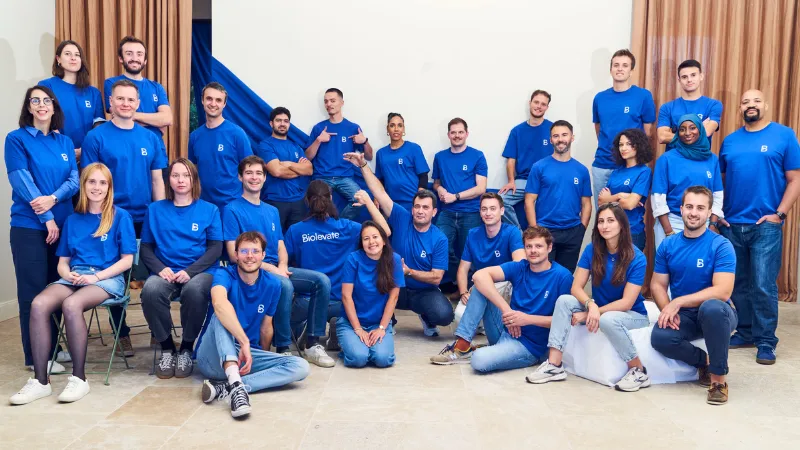
Biolevate was founded in Paris by former Dataiku engineers and AI researchers. The company focuses on helping life sciences businesses save time and work more efficiently. As the global pharmaceutical market continues to grow, companies are under pressure to develop and launch new medicines faster.
While advanced AI is already helping with drug discovery and development, many other parts of the pharmaceutical process still involve slow and complex work. These delays can make it harder for new treatments to reach patients quickly.
To solve this problem, Biolevate has built a specialised AI platform for life sciences companies. The platform turns scientific and regulatory information into automated workflows that can be checked and tracked. Unlike general AI tools, Biolevate keeps its results linked to source evidence, helping companies use AI in highly regulated areas while keeping human experts involved.
The company first developed its platform to speed up regulatory approval work. It now supports a wider range of activities, including scientific research, clinical trials, health technology assessments, regulatory documents, drug discovery, and drug development.
Biolevate says its platform can run up to 100,000 AI agents at the same time. According to the company, its technology has helped speed up literature reviews and research analysis by 16 times, while improving efficiency in regulatory intelligence and compliance by 80%.
Joël Belafa, Co-Founder and CEO at Biolevate, said: “We started Biolevate with a mission-driven team united by the belief that AI could improve millions of lives if we empowered the right people and solved the right technological challenges. Today, our vision is becoming reality. Customers are increasingly embracing AI automation at scale, grounded in evidence and under rigorous human oversight. This milestone, paired with the extraordinary traction we are experiencing, confirms that we are on track to build a global champion in this emerging category and, more importantly, to deliver on AI’s promise for healthcare.”
Aymar Hénin, Entrepreneur and newly appointed Chairman of Biolevate, said: “Biolevate is addressing one of the most important challenges in life sciences: turning the extraordinary potential of AI into trusted, evidence-grade automation that can operate at scale in regulated environments. The company’s rapid commercial progress, deep technological expertise and ambitious team give us strong conviction in its ability to become a global category leader. I am proud to support that journey as an investor and to work closely with Joël and the team as Chairman.”
Jérôme Berger, Head of Group Strategy & Venture Capital at Orange, added: “In healthcare, the value of AI depends on the trust people can place in the knowledge it produces. Biolevate’s approach to making complex scientific information accessible, reliable and usable, strongly aligns with our vision of responsible AI, and we are delighted to co-lead this new stage of the company’s growth.”
Biolevate develops AI technology for life sciences companies that need to work with strict regulations. Its platform brings together scientific research, regulatory information, company data, workflows, and AI agents to help teams automate complex tasks.
The platform is designed to keep AI-generated work easy to track, review, and reproduce. Human experts remain in control, while companies can use AI to automate regulated work more safely and efficiently at a larger scale.